Introduction: Transforming Darkness into Potential
Decorating a windowless room is often perceived as a challenge. The lack of natural light can make the space feel gloomy, claustrophobic, and unwelcoming. However, instead of viewing the absence of a window as a problem, we should consider it a unique opportunity to experiment with artificial lighting, colors, mirrors, and smart organization.
These types of rooms—whether they are basements, internal offices, guest rooms, or studios—offer a blank canvas for completely controlling the atmosphere. By mastering specific interior design techniques, we can transform a dark space into an oasis that is bright, cozy, and visually larger.
In this comprehensive guide, we will reveal the 15 most effective windowless decorating strategies, used by professional designers to maximize light, space, and warmth, ensuring your indoor environment feels as vibrant as any room with a view.
I. Mastering Artificial Lighting: The Sunlight Substitute
In an interior room without windows, lighting is not just functional; it is the most crucial design element. Your goal is to replicate the complexity and warmth of natural light.
1. Lighting Layering
The golden rule is to avoid a single overhead light source. Instead, use lighting layering, which involves combining three layers:
-
Ambient Light (General): Recessed lights or flush-mount fixtures that mimic daylight.
-
Task Light (Functional): Table lamps, floor lamps, or wall sconces that illuminate work or reading areas.
-
Accent Light (Decorative): Lights directed at artwork, plants, or architectural features to create depth.
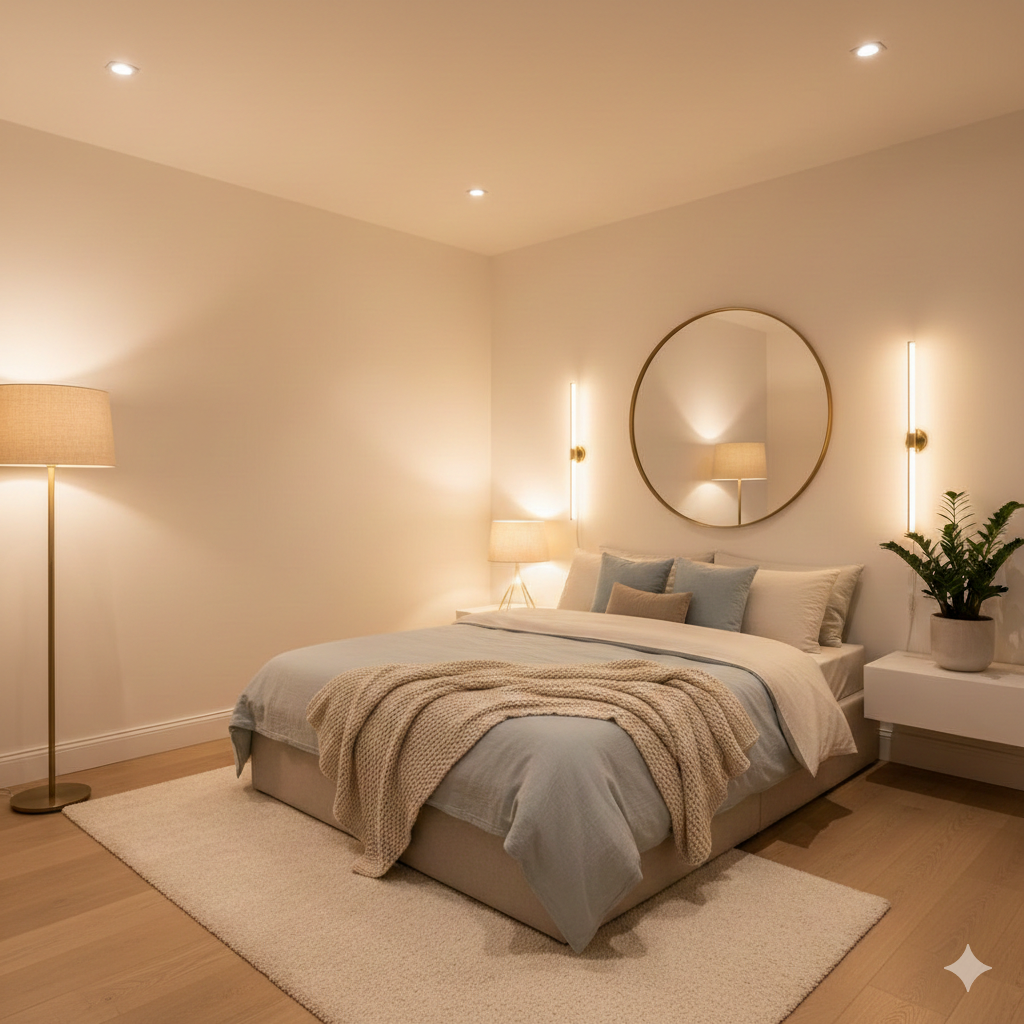
2. Choosing the Correct Color Temperature (Kelvin)
The key to making artificial light feel natural is the tone.
-
Opt for a warm to neutral light color, ideally between 2700K and 3500K (Kelvin). 2700K bulbs imitate candlelight or sunset, creating a cozy ambiance. 3500K offers a neutral white light, excellent for offices or workspaces.
-
Avoid lights that are too cool (above 4000K), as they can accentuate the «cave» feeling.
3. Hidden Indirect LED Lighting
Install hidden LED strips behind moldings, on bed skirts, or under floating shelves. This indirect light bounces off the walls and ceiling, eliminating harsh shadows and visually raising the ceiling, making the windowless room appear larger.
II. The Power of Illusion and Reflection
Since you cannot let light in, the next best strategy is to multiply the light you already have and create the illusion of depth.
4. Strategic Mirrors
A large mirror is your best ally. Place it on the wall where you would «expect» a window to be.
-
Faux Window Mirror: Use a mirror with a lattice frame that mimics window divisions. It will reflect the room’s ambient light, tricking the eye into perceiving a view.
-
Mirrors at Key Points: Position mirrors to reflect artificial light sources, such as floor lamps or sconces, doubling their brightness.
5. The Faux Window Trick or Illuminated Mural
For a bolder solution, consider installing a faux window.
-
Backlit Mural or Vinyl: Design a traditional window frame and place a diffusion panel behind it with a landscape image (or simply white light) illuminated with high-brightness LEDs. This is an ingenious and modern solution for decorating a windowless room.
-
Curtains and Blinds: Hang sheer curtains on the mirror or mural wall to reinforce the illusion that there is a source of natural light behind it.
III. Color Therapy and Materials: The Smart Color Palette
The colors you choose will drastically affect how the lack of light is perceived. Your goal is to maximize reflectivity.
6. Prioritize Light Colors
-
Walls and Ceiling: Opt for warm whites, creams, very pale beiges, or very soft pastel tones (like a pale gray or a light mint green). These colors have the highest Light Reflectance Value (LRV), making the room appear wider and brighter.
-
Monochrome with Texture: Keeping the color palette close (monochromatic) helps blur boundaries and prevents the gaze from stopping in dark corners.
7. Use Sheen to Reflect
Integrate materials with some reflective capacity in a subtle way:
-
Floors: Choose light wood floors or tiles with a polished or semi-gloss finish. Avoid large, very dark rugs.
-
Furniture: Use furniture with lacquered finishes, glass, or shiny metals (like brass or chrome) to bounce light at different angles.
-
Textiles: Prefer cotton, silk, or linen fabrics in light colors for bedding and cushions.
8. Pops of Color and Contrast
Although the base should be light, the room should not be boring.
-
Subtle Accent Wall: If you want an accent wall, choose a slightly deeper color or a soft texture. Make sure this wall receives the best accent lighting to prevent it from «absorbing» the light.
-
Vibrant Accents: Incorporate vibrant colors (like mustard, cobalt blue, or emerald green) through small accessories, books, or art to add energy without darkening the space.
IV. Interior Design and Space Organization
In a small, dark space, organization becomes a crucial design factor.
9. Choose Low and Light Furniture
Tall, bulky furniture can cast large shadows and accentuate the feeling of confinement.
-
Floating Furniture: Use floating shelves or wall-mounted desks.
-
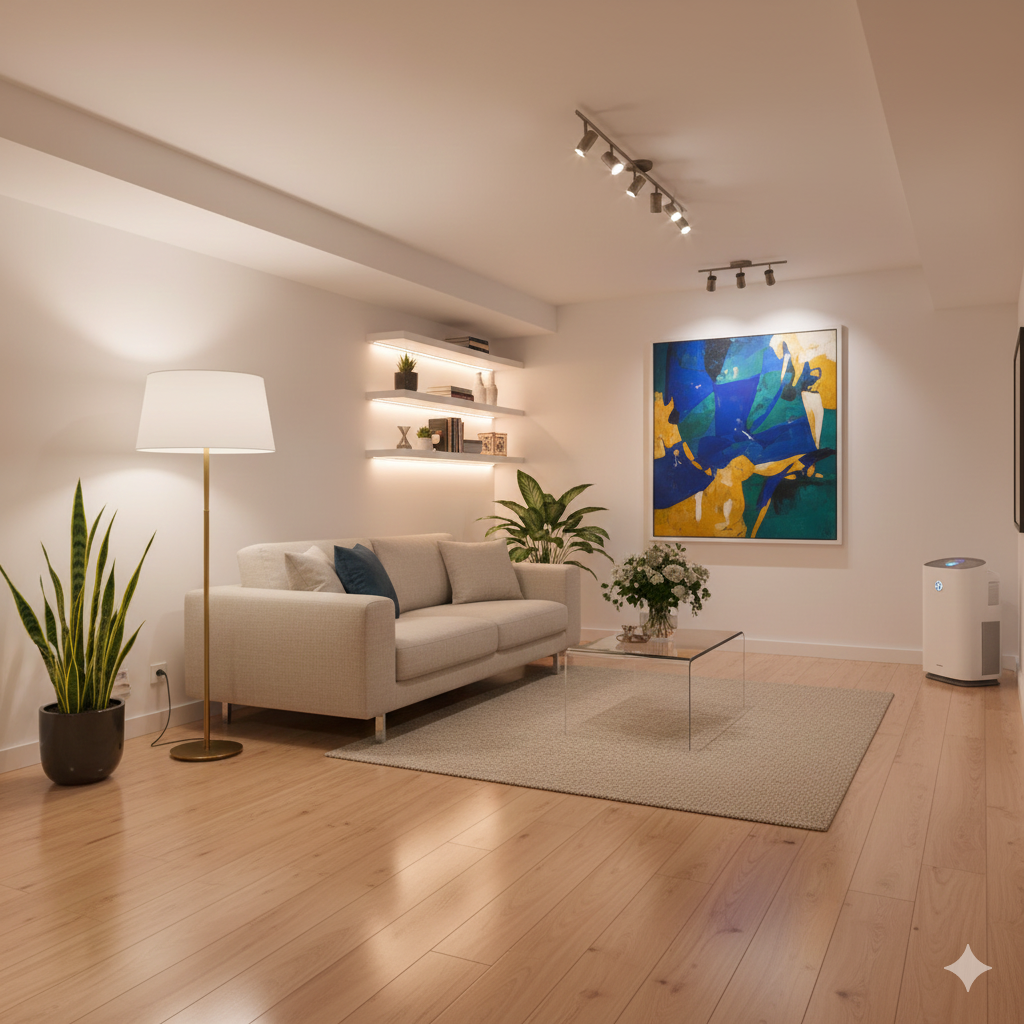
Furniture with Legs: Prefer sofas, tables, and chairs with visible legs so the eye can see the floor, creating a sense of continuity and space.
-
Transparent Materials: Center or side tables made of acrylic or glass are ideal, as they do not obstruct vision or light.
10. Maintain Order and Minimize
Visual clutter is the number one enemy of a windowless room. Clutter absorbs light and makes the space feel smaller.
-
Closed Storage: Maximize the use of closed, smart cabinets to store items.
-
Functional Minimalism: Every object should have a purpose.
11. Create a Focal Point of Interest
Since there is no exterior view to act as a natural focal point, you must create one:
-
Large-Format Art: A large, colorful, and well-lit piece of art will draw the eye.
-
A Luxurious Bed: In a bedroom, a spectacular headboard or sophisticated bedding can be the center of attention.
- Display Shelving: Minimalist shelving that showcases interesting design objects with accent lighting.
V. Scenting, Ventilation, and Natural Elements
A room without ventilation or fresh air not only feels dark, but also stagnant. Addressing the «wellness» of the space is as important as visual decoration.
12. Ventilation and Air Purification Solutions
Ensure the air feels fresh to compensate for the lack of natural ventilation.
-
Quality Air Purifier: A good purifier with a HEPA filter is essential.
-
Fan or Extractor: If the room is used frequently, consider installing a quiet extractor fan, especially if it is a bathroom or a converted storage room.
-
Aroma Diffusers: Use citrus essential oils (lemon, grapefruit) which are subconsciously associated with light, cleanliness, and vitality.
13. Integration of Nature Elements
Nature is key to humanizing the space.
-
Low-Light Plants: There are many indoor plants that do not need natural light, such as Sansevieria (Snake Plant), Zamioculcas (ZZ Plant), or Spathiphyllum (Peace Lily).
-
Natural Textures: Use wood, rattan, wicker, or stone in the decor. These elements bring warmth and connection to the outside.
14. The Ceiling as a Fifth Wall
Often overlooked, the ceiling can be your best reflective surface.
-
Semi-Gloss Finish: Paint the ceiling with an eggshell or semi-gloss finish in a pure white.
-
Ceiling Lighting: Ensure that spotlights are strategically placed so that light bounces off the ceiling downwards, rather than just illuminating the floor directly.
15. Use Glass or Translucent Doors
If the room adjoins another space with windows, replace the solid wood door with:
-
French Doors (Glass Panel): They allow light from the adjacent room to filter in.
-
Japanese Sliding Panels (Shoji): They offer privacy but let soft, diffused light pass through. This technique creates a very subtle and elegant «passing light» effect.
Conclusion: Your Own Indoor Haven
Decorating a windowless room is an exercise in smart design where artificial light, color, reflection, and organization substitute for sunlight.
By implementing these 15 foolproof strategies—from LED lighting layering to the strategic use of mirrors and low-light plants—you can transform any gloomy interior space into a functional, vibrant, and visually spacious haven.
Remember: in design, limitation is the mother of invention. Enjoy creating your own luminous oasis!
Latest Posts Published
✨ How to Decorate a Windowless Room: 15 Surefire Strategies for Creating a Bright and Cozy Oasis
How to Decorate a Narrow Hallway Without Overwhelming the Space: Complete Guide to Expanding and Modernizing It (2025)
How to Decorate a Small Bathroom with Functional Ideas: The Definitive Guide 2026
How to Organize Your Kitchen to Make It Look Neat and Modern (Step-by-Step Guide)
Wabi-Sabi Decor 2025: How to Create Imperfect Yet Elegant Spaces
How to Choose the Perfect Lighting for Every Room

DIY Decorating with Natural Wood: 15 Rustic and Modern Ideas
How to Combine Maximalism and Minimalism in Interior Design (2025 Trends)
Sustainable Vintage Decor: Guide to a Trendy Retro-Style Home