In the frantic pace of modern life, we spend most of our time in indoor spaces. This disconnection from our natural surroundings has a palpable cost on our mental and physical well-being. Biophilic Design is not a passing fad; it is a discipline that seeks to integrate natural elements into the home to satisfy our innate need for connection with life.
Integrating the magic of nature into the furnishing and decoration of your home is the smartest investment you can make in your quality of life. It’s not just about adding a plant, but about orchestrating materials, light, shapes, and textures that mimic the richness of the outdoor world.
This comprehensive guide will provide you with the keys and strategies to implement Biophilic Design in every room of your home, ensuring an environment that promotes calm, reduces stress, and elevates style to an organic and sophisticated level.
I. The Foundations of Biophilic Design and its Wellness Benefits
Biophilic Design is based on the premise that exposure to nature in the built environment has a measurable positive impact on our health.
1. Proven Benefits: Stress Reduction and Cognitive Improvement
Numerous studies have shown that the presence of natural elements in the home has therapeutic effects:
-
Cortisol Reduction: The simple sight of plants or natural elements decreases cortisol levels (the stress hormone) and reduces blood pressure and heart rate.
-
Improved Concentration: Exposure to nature improves cognitive function and the ability to concentrate, which is invaluable in home offices.
-
Air Quality: Indoor plants act as natural filters, absorbing common toxins (such as formaldehyde) and releasing oxygen, improving indoor air quality and rest.
2. Types of Natural Integration: Direct and Indirect
Biophilia can be achieved in two ways:
-
Direct Connection: Use of living and natural elements (plants, sunlight, water).
-
Indirect Connection: Use of materials, shapes, patterns, and colors that evoke nature (untreated woods, grain patterns, textures that mimic stone, earthy colors).
II. Material Strategies: The Tactile and Organic Touch
The selection of materials is where the authenticity of Biophilic Design is defined, introducing texture, warmth, and a minimal environmental impact.
1. The Power of Wood and Stone
Avoid glossy and synthetic finishes. Prioritize the nobility of materials in their purest state.
-
Untreated or Oiled Wood: Use wood with visible grain (oak, walnut, bamboo). Choose matte or oiled finishes instead of plastic lacquers, allowing the wood to feel «alive» and retain its texture. This applies to furniture, flooring, and decorative details.
-
Natural Stone and Clay: Use stone countertops (marble, granite) in the kitchen and bathroom. In decoration, use terracotta pots, clay vessels, or unglazed ceramic vases. These materials provide a tactile coolness and a connection to the earth.
2. Natural Textiles and Organic Shapes
Textiles should be chosen based on their origin and feel.
-
Plant Fibers: Prioritize linen, organic cotton, hemp, and virgin wool. Use thick knit, braided, or knotted fabrics (like macramé) in blankets, cushions, and rugs to add texture and warmth.
-
Fiber Furniture: Chairs, ceiling lamps, or storage baskets made of rattan, wicker, or bamboo. These elements introduce woven forms that recall natural nests and frameworks.
-
Curved Shapes: For furniture (sofas, side tables), opt for organic, curved, and rounded shapes that mimic the fluidity of nature, in contrast to rigid straight lines.
III. Light and Visual Connection: The Indoor Landscape
Light and views are the most powerful biophilic elements, as they mimic the experience of being outdoors.
1. Maximizing Natural Light (The Sun as a Nutrient)
-
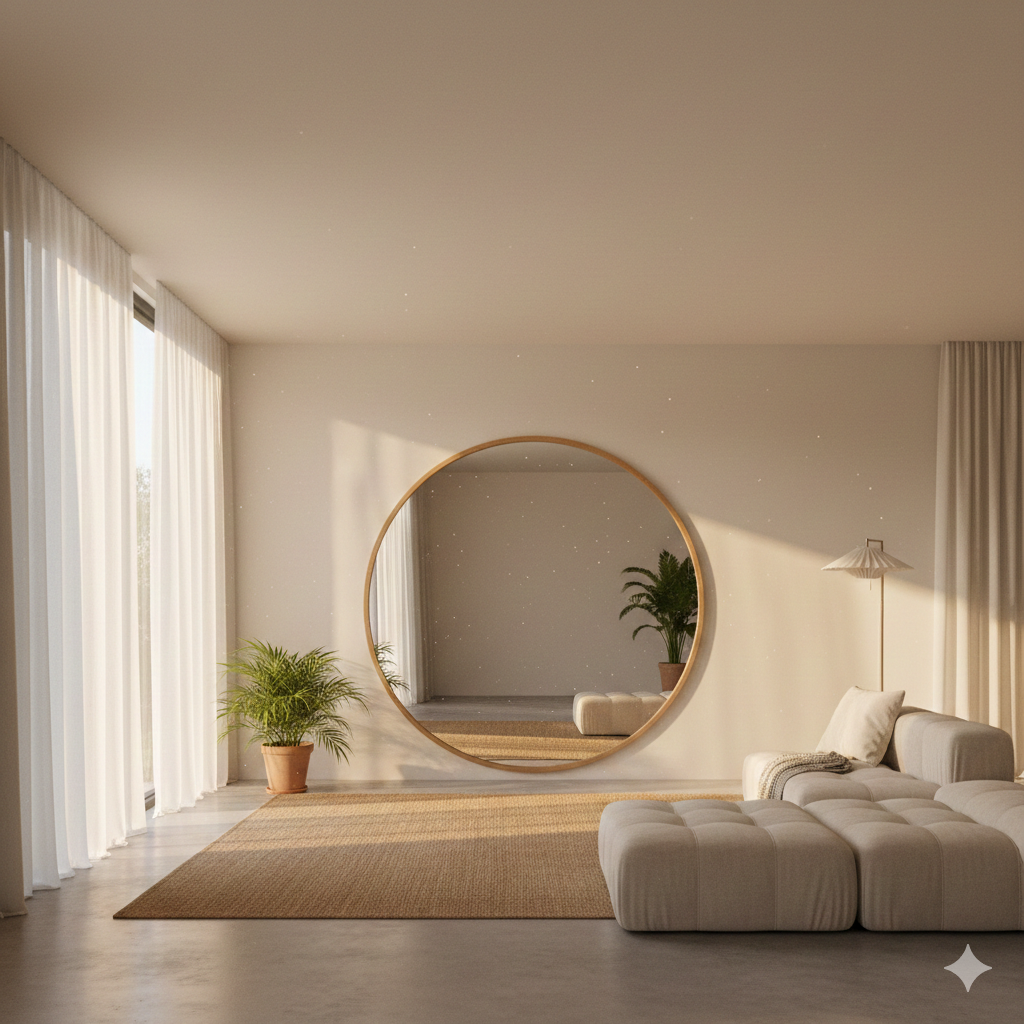
Window Freedom: Avoid heavy curtains. Use very fine linen sheer curtains or wooden blinds that filter the light, creating a play of light and shadow that changes throughout the day. This movement of light is vital for well-being.
-
Multiplier Effect: Strategically place mirrors to bounce natural light and reflect an exterior view or a green indoor corner.
2. Circadian Rhythm Artificial Lighting
Artificial light must support our body’s natural cycle.
-
Daylight (Cool/Neutral): Use cooler or neutral light tones ($4000text{ K}$) in the mornings and in work areas (kitchen, office).
-
Night Light (Warm): Transition to very warm lights ($2700text{ K}$) in the late afternoon and evening (living room, bedroom). This supports melatonin production and promotes rest.
-
Shadows and Texture: Use paper or natural fiber lampshades that project soft, textured patterns onto the walls, replicating the light filtering through foliage.
IV. Integration of Living Elements: Domestic Flora and Fauna
No biophilic space is complete without the presence of real life.
1. Strategic Plant Selection
Plants should be chosen for their shape, resilience, and air-purifying capacity.
-
Plants with a Strong Presence: Use large species (Ficus Lyrata, Monstera Deliciosa) that require space and create an interior micro-landscape. Place them near light and in clay pots.
-
The Cascade Effect (Rhythmic Pattern): Hang trailing plants (Pothos, Ivy) on shelves or near windows. The downward movement of the leaves mimics the rhythmic, fluid patterns of nature, which are inherently calming.
-
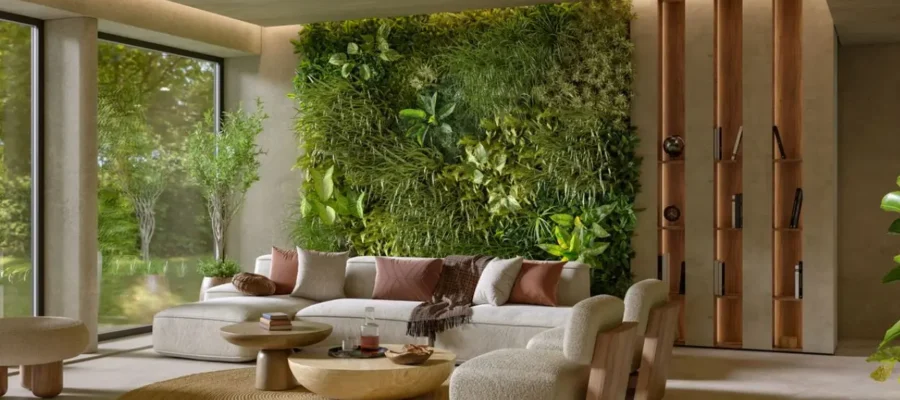
Green Walls or Vertical Gardens: For kitchens or living rooms, a small vertical garden with aromatic herbs or preserved moss can be an impressive focal point and a sensory contribution.
2. The Element of Water and Sound
The sound of water is one of the most relaxing elements that can be introduced.
-
Indoor Fountains: A small water fountain in the living room or a meditation corner adds a soft white noise that masks annoying city sounds and fosters calm.
-
Aquariums: A well-maintained aquarium introduces color, hypnotic movement, and life, serving as a powerful biophilic visual anchor.
V. Practical Application by Room: Where to Find Nature
The approach must adapt to the function of each room.
| Room | Key Biophilic Focus | Recommended Elements |
| Living Room | Connection with the Outdoors and Relaxation. | Curved sofas, wool rugs, large plants (Monstera), tree trunk or stone coffee tables. |
| Bedroom | Calm, Stress Reduction, and Darkness. | Linen textiles, wooden headboards, low-level warm lighting, air-purifying plants (Sansevieria). |
| Kitchen | Raw Materials and Productivity. | Stone or wood countertops, open shelving with pots of aromatic herbs (rosemary, basil). |
| Home Office | Concentration and Cognitive Function. | Wooden desk with a window view, small plants on the desk, dimmable lighting. |
Conclusion: Biophilic Design as a Philosophy of Life
Integrating the magic of nature into your home’s furnishings is more than an aesthetic choice; it is a design philosophy geared towards health and well-being. By prioritizing natural light, organic materials (wood, stone, linen), and the presence of plant life, you transform your house from a simple shelter to a genuine sanctuary of calm and vitality. This approach not only beautifies but also imbues your space with a functional serenity that recharges you every day.
Latest Posts Published
✨ How to Decorate a Windowless Room: 15 Surefire Strategies for Creating a Bright and Cozy Oasis
How to Decorate a Narrow Hallway Without Overwhelming the Space: Complete Guide to Expanding and Modernizing It (2025)
How to Decorate a Small Bathroom with Functional Ideas: The Definitive Guide 2026
How to Organize Your Kitchen to Make It Look Neat and Modern (Step-by-Step Guide)
Wabi-Sabi Decor 2025: How to Create Imperfect Yet Elegant Spaces
How to Choose the Perfect Lighting for Every Room
DIY Decorating with Natural Wood: 15 Rustic and Modern Ideas
How to Combine Maximalism and Minimalism in Interior Design (2025 Trends)
Sustainable Vintage Decor: Guide to a Trendy Retro-Style Home