The Chesterfield sofa is the quintessential symbol of timeless design, a hallmark of solidity and sophistication. However, its rich history often raises a major design question: How can I integrate this classic, formal piece into a modern, minimalist, or industrial living room, preventing it from looking heavy or dated?
The key to modernizing the Chesterfield lies in the rule of contrast. The goal is not to camouflage the sofa but to celebrate its traditional elegance and bring it into dialogue with contemporary design elements, raw materials, and clean lines.
This comprehensive guide will provide you with practical strategies, broken down by element (color, upholstery, accessories, and auxiliary furniture), to transform your Chesterfield into the centerpiece of an avant-garde and sophisticated interior.
I. The Color Break: Escaping Classic Brown and Burgundy
The first step to modernizing your Chesterfield is to free it from its traditional color palette associated with dark libraries.
1. Cool and Neutral Palettes (Minimalist and Scandinavian Style)
Cool and neutral tones work as a contemporary canvas that softens the formal rigidity of the tufting.
-
Stone or Charcoal Gray: A Chesterfield in charcoal gray or dove gray leather or velvet is a powerful and modern visual anchor. Gray is a neutral that balances the warmth of the classic shape with the coolness of current aesthetics.
-
Concrete Suggestion: Combine a gray sofa with pure white walls and microcement or light wood flooring for a minimalist effect.
-
-
Off-White or Beige: A Chesterfield in thick linen or white leather (pigmented for greater resistance) is the most radical option for achieving lightness. This turns it into a light-reflecting sofa, essential in small or Nordic spaces.
2. Deep Jewel Tones (Glam and Art Deco Style)
For a bolder approach that retains luxury but with a modern twist.
-
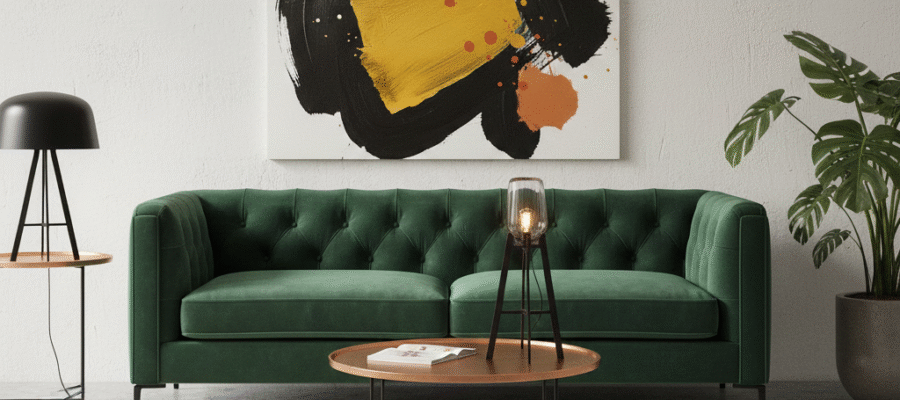
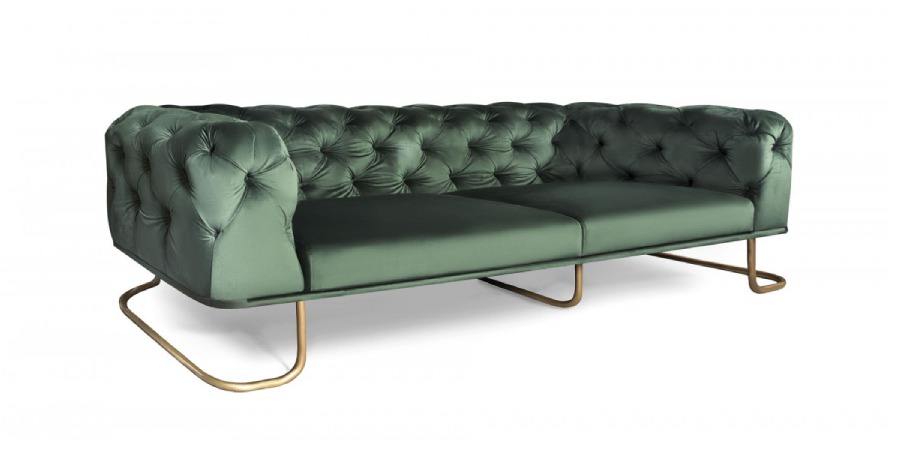
Emerald Green or Midnight Blue: Choosing technical velvet in these deep tones (as opposed to traditional leather) adds a soft texture and a touch of contemporary glamour, especially when combined with gold or brass metals.
II. Material Contrast: Softening Classic Formality
The key to making the Chesterfield feel current is for all other elements to be its opposites: light, textured, and clean-lined.
1. Auxiliary Furniture (Metal, Glass, and Pure Lines)
Eliminate heavy wooden coffee tables and opt for transparency and industrial lightness.
-
Matte Black Metal: Use coffee tables and shelves with slender metal structures (hairpin legs). The contrast between the voluminous leather of the sofa and the geometric rigidity of the metal creates visual tension, a sign of modern design.
-
Concrete Suggestion: A coffee table with a black metal base and a smoked glass or veined marble top allows the sofa’s shape to be visible and doesn’t visually weigh down the floor.
-
-
Floating or Nesting Tables: Use nesting tables (several tables of different sizes that group together). This offers functionality without taking up fixed space.
2. Textiles and Rugs (The Layer of Warmth)
Textiles are your most powerful tool for injecting warmth and modernity into the formal seating.
-
Geometric or Jute Rugs: Replace Persian or classic rugs. Use wool rugs with geometric patterns in black and white (Beni Ourain style) or jute and sisal rugs (plant fibers). These organic materials and modern patterns neutralize the formality of the leather.
-
Contrast Cushions: Add cushions made of linen, faux fur, or bouclé fabric with pronounced textures. The contrast between the smooth, taut leather of the tufting and the «messy» softness of modern cushions is essential.
III. Lighting and Accessories: The 21st-Century Finishing Touch
Lighting and wall decor are crucial to recontextualize the sofa.
1. Designer Lighting (Breaking Symmetry)
Lighting should be bold and contemporary, acting as a sculpture.
-
Architectural Lamps: Use Arc-style floor lamps (with a large curved arm) or pendant lamps with a geometric metal design. These elements should dominate the space and provide an aesthetic counterpoint.
-
Steel or Copper Light: Avoid traditional wooden-based lamps. Choose polished copper, chrome, or brass finishes for an Art Deco feel, or black metal for an Industrial look.
2. Art and Walls (The Minimalist Environment)
The wall behind the sofa must be modern to project the Chesterfield into the present.
-
Abstract Art: Place a single large abstract painting with bold strokes and vibrant colors. A single modern focal point is more effective than a classic photo gallery.
-
Textured Walls: Use wallpaper with a subtle geometric texture or microcement cladding. This gives the wall a tactile interest that complements the deep texture of the tufting.
-
Mirrors: A large-format mirror with a thin frame or no frame, leaned against the wall behind the sofa, will reflect light and enlarge the space, reducing the sofa’s heavy feel.
IV. Sectional Styling: How to Use the Modern Chesterfield Version
Modernization is not just aesthetic; it is also functional. Manufacturers have adapted the shape.
1. Revised Models: Fewer Arms, More Seating
Look for versions of the Chesterfield that have already been designed with a modern touch:
-
Lower Arms: Models with slightly lower and less voluminous arms.
-
Visible Legs: Chesterfield sofas mounted on visible tapered or metallic legs. This lifts the furniture off the floor, creating visual lightness.
-
Concrete Suggestion (Chaise Longue): For modern comfort, consider a version with a chaise longue or corner module upholstered in the same tufting. This merges modular functionality with classic aesthetics.
2. Maintenance as a Modern Value
Durability is a modern value. Opting for a Chesterfield in pigmented leather or technical velvet (as mentioned in the previous article) ensures the furniture withstands daily use without requiring the extreme care of aniline leather.
Conclusion: The Beauty of Duality
The Chesterfield sofa is the perfect piece for contemporary design. Its timeless beauty is amplified, not reduced, when contrasted with modern aesthetics. By applying the strategies of neutral and cool palettes, light and metallic auxiliary furniture, and sculptural lighting, a dynamic balance is achieved. The result is a living room that honors the tradition of comfort and durability while confidently projecting itself toward the future of design.
Latest Posts Published
✨ How to Decorate a Windowless Room: 15 Surefire Strategies for Creating a Bright and Cozy Oasis
How to Decorate a Narrow Hallway Without Overwhelming the Space: Complete Guide to Expanding and Modernizing It (2025)
How to Decorate a Small Bathroom with Functional Ideas: The Definitive Guide 2026
How to Organize Your Kitchen to Make It Look Neat and Modern (Step-by-Step Guide)
Wabi-Sabi Decor 2025: How to Create Imperfect Yet Elegant Spaces
How to Choose the Perfect Lighting for Every Room
DIY Decorating with Natural Wood: 15 Rustic and Modern Ideas
How to Combine Maximalism and Minimalism in Interior Design (2025 Trends)
Sustainable Vintage Decor: Guide to a Trendy Retro-Style Home