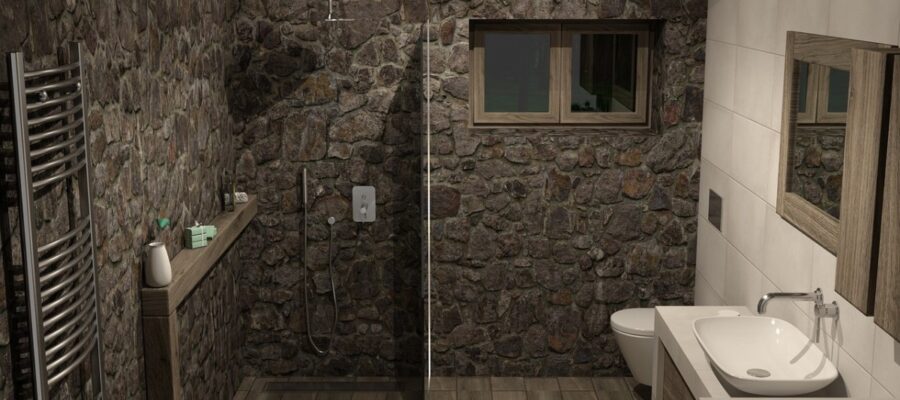
The bathroom, historically relegated to being a simple service area, has been revalued to become a true domestic sanctuary. Today, we seek it to be a space for disconnection, a private spa. And there is no material that brings more warmth, nobility, and natural connection to this environment than wood.
The challenge of designing a bathroom on an existing wooden structure, or simply incorporating this material into humid environments, is not only technical but profoundly aesthetic. It requires balancing functionality, durability, and, above all, the creation of an atmosphere of quiet luxury.
This article is an exhaustive design and decor guide that will show you how to masterfully use wood to transform your bathroom into a warm, elegant, and unique space, providing real and tangible value to your daily wellness experience.
I. The Design Philosophy: Nordic Warmth and Sustainable Luxury
The starting point for a successful wooden bathroom is to adopt a philosophy that prioritizes warmth over the coldness of traditional tiling. Wood softens the transition from dry to wet areas, making the bathroom feel like a natural extension of the home, rather than a watertight capsule.
1. Scandinavian Inspiration (Hygge in the Bathroom)
Nordic countries, with their cold climates, dominate the integration of wood into all spaces. The concept of Hygge (well-being and comfort) translates into bathrooms where:
-
Light is soft and diffused: Multiple light sources are used instead of one powerful overhead light.
-
Natural textures prevail: Light woods (ash, birch, pine) combined with linen and cotton.
-
Simplicity is key: Furniture with straight, functional lines that avoid visual clutter.
2. Material Contrast: The Perfect Balance
An entirely wooden bathroom can be overwhelming. The secret to luxury design is subtle contrast.
Combine the warmth of wood with the coolness and elegance of cold materials:
-
Marble or Microcement: On the shower wall or countertop.
-
Brass or Copper: For the faucets, which provides a luxurious vintage or industrial touch.
-
Large Format Porcelain: On the floor, imitating natural stone or slate, for a solid visual anchor.
II. Key Wood Design and Decor Elements
Wood must be selected strategically, understanding its aesthetic and functional role in the humid environment.
1. The Wooden Floor: The Great Protagonist
While the installation of a real wooden floor over an existing structure is complex (and must be tackled with treated woods like Teak or Iroko), aesthetically, the impact is unmatched.
Aesthetic Alternatives Without Risk: If the installation of real wood is too costly or risky, current design offers perfect aesthetic solutions:
-
Wood-Effect Porcelain Tile: Modern technologies replicate the grain and feel of wood with astonishing fidelity. It allows for the wood look with the peace of mind of a 100% waterproof material.
-
High-Resistance Laminate Floors (AC5/AC6): Specifically designed for bathrooms (water-resistant), easily installed over a stable base.
2. Floating Furniture and Storage
Bathroom furniture is the second most important element for introducing the warmth of wood.
-
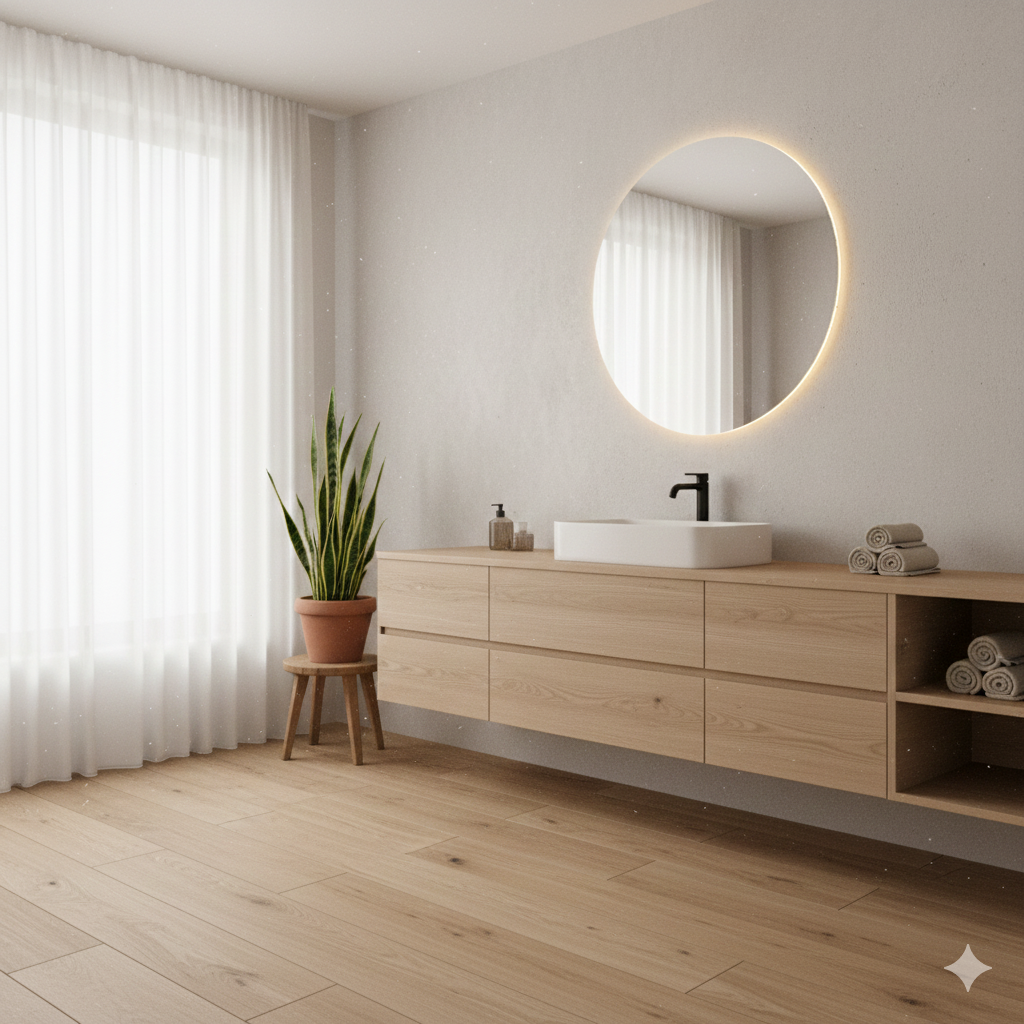
Countertops and Integrated Sinks: A solid wood countertop (oak, walnut, or bamboo) on a suspended vanity creates a very elegant focal point. The ideal is to seal it with marine polyurethane oils or varnishes that repel water.
-
Suspended (Floating) Design: Floating vanities are essential in a bathroom with a wood floor (real or effect). Visually, they lighten the design’s weight and give the feeling of a larger space. Functionally, they facilitate cleaning and prevent prolonged contact of the furniture base with moisture.
-
Open Shelving: Small shelves of reclaimed or treated wood provide an ideal spot for decorative objects, such as scented candles, hand towels, or small plants, reinforcing the spa ambiance.
3. Paneling and Cladding: The Rustic-Chic Touch
To prevent the bathroom from feeling cold, wood cladding can be used in areas with a low risk of direct splashing (e.g., the upper half of the walls).
-
Wainscoting or Vertical Paneling: Wood paneling painted white or in a soft pastel tone. It provides a very cozy farmhouse or shaker feel.
-
Slatted Panels: The current trend that uses dark or light wood slats to create a textured accent wall. It is perfect behind the toilet or on the sink wall.
III. Lighting and Accessories: The Bathroom as a Wellness Space
The design of a wellness bathroom is not complete without strategic lighting and accessories that reinforce the sense of calm.
1. Strategic Lighting
In the serenity bathroom, light must be mutable: functional for tasks and ambient for relaxation.
-
Functional Light: Task lighting at the mirror (integrated LED strips or side sconces) with a neutral color temperature ($4000text{ K}$) to ensure faithful color reproduction (makeup or shaving).
-
Ambient Light (Relaxation): Very warm light ($2700text{ K}$) from dimmable ceiling spotlights. This light is dimmed during a bubble bath, creating a spa atmosphere.
-
Accent Light: Hidden LED strips under the floating vanity or behind the mirror. This soft glow is ideal for using the bathroom at night without turning on harsh lights.
2. Accessories That Speak of Nature
Reinforce the natural connection of the wood with organic accessories:
-
Humidity-Loving Plants: Species that love moisture, such as Ferns, Bamboo, or Sansevierias, add life and color. A clay or rope planter on a small wooden shelf is the perfect detail.
-
Textiles: High-density linen or cotton towels, in earth tones or off-white. A jute or natural fiber bath rug provides a comforting tactile texture underfoot.
-
Storage Details: Wicker or bamboo baskets for storing dirty laundry or towel rolls.
IV. The Final Touch: The Personalization of Luxury
A bathroom of real value is one that is personal and appeals to the senses beyond sight.
1. Aromatherapy and Rituals
Use the sense of smell as the emotional connector of the space:
-
Essential Oil Diffusers: A programmable diffuser with aromas of eucalyptus (stimulating and fresh) or lavender (calming) instantly transforms the atmosphere.
-
Natural Soy Candles: A good quality scented candle, lit during a bath or shower, adds an element of ritual and a very soft, vibrant light.
2. Mirror Design
The mirror is the largest focal point after the shower.
-
A circular mirror with a dark wood or black frame over a microcement or subway tile wall background creates a modern and elegant contrast.
-
Opt for mirrors with integrated anti-fog heating to maintain the space’s functionality—a detail of true luxury.
Conclusion: The Investment in Well-being
Designing a bathroom on any structure, and especially with wood, is an exercise in conscious design. It’s not just about how waterproof it is, but how welcoming and functional we have made it. By integrating the nobility of wood with strategic lighting, natural accessories, and the best material technology, we create a space that honors quiet luxury.
This design approach transforms a utilitarian room into a personal refuge, a direct investment in your quality of life and your daily well-being.
Latest Posts Published
✨ How to Decorate a Windowless Room: 15 Surefire Strategies for Creating a Bright and Cozy Oasis
How to Decorate a Narrow Hallway Without Overwhelming the Space: Complete Guide to Expanding and Modernizing It (2025)
How to Decorate a Small Bathroom with Functional Ideas: The Definitive Guide 2026
How to Organize Your Kitchen to Make It Look Neat and Modern (Step-by-Step Guide)
Wabi-Sabi Decor 2025: How to Create Imperfect Yet Elegant Spaces
How to Choose the Perfect Lighting for Every Room
DIY Decorating with Natural Wood: 15 Rustic and Modern Ideas
How to Combine Maximalism and Minimalism in Interior Design (2025 Trends)
Sustainable Vintage Decor: Guide to a Trendy Retro-Style Home