In the daily battle for space at home, there is a silent enemy: the “sweep arc” of a traditional door.
That square meter you leave free so that the bathroom door can open without hitting the sink. That wasted corner in the kitchen because the pantry door blocks it. It’s dead space.
What if that door could simply disappear?
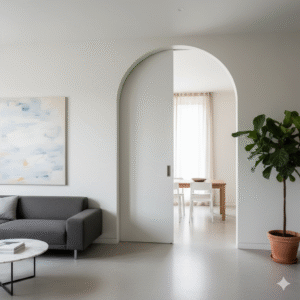
That’s the magic of pocket doors. Not only do they slide, but they also hide inside the wall itself, creating a feeling of spaciousness, minimalism, and fluidity that no other solution can match.
Although installing one in an existing wall seems like a complicated job, it’s one of the smartest renovations you can do. In this guide, we demystify the process and give you all the decorating tips you need to make the most of it.
More Than Just a Door: The Ultimate Solution for Small Spaces
Before picking up the hammer, let’s talk about the “why.” The benefits go far beyond simple convenience.
Gain usable square meters: You reclaim all the space that the door used to occupy when opened. In a 4 m² bathroom, this means you can install a storage unit that previously wouldn’t fit.
Create visual flow and minimalism: When open, the door disappears. This is perfect for connecting (or separating) the kitchen from the living room, creating a clean and airy space. Say goodbye to bulky hinges and frames.
Solve layout problems: It’s the star solution for en-suite bathrooms, small walk-in closets, pantries, laundry rooms, or narrow hallways where two doors are too close together.
Add a “premium” design touch: A door that hides within the wall gives a bespoke, thoughtfully designed architectural feel.
Decorating Ideas: Where to Install a Built-in Door
In Small Bathrooms (en-suite): This is its prime location. It allows for a much more logical layout of the fixtures without the door getting in the way.
In the Kitchen: Perfect for hiding the laundry area or pantry.
In Walk-in Closets: Closets are usually narrow. Removing a swinging door (inward or outward) makes them infinitely more comfortable to use.
To Separate Spaces: Want to combine the living and dining areas but still be able to close them off sometimes? A double pocket door gives you that flexibility without taking up any space when open.

Installation Guide: What It Really Means to Put It on an Existing Wall
This is where we adapt your technical content. Let’s be honest: installing a pocket door in an existing wall involves some construction work. It’s not as simple as changing a hinge, but it’s completely doable.
Here’s a simplified process so you know what to expect in your home:
-
The Key Component: The “Casoneto” (Frame)
You’re not just buying a door—you’re buying a kit. The most important part is the casoneto: a metal structure (like a thin, flat box) that fits inside the wall and acts as a “garage” for the door. -
Brick Wall or Drywall?
-
Drywall (Pladur): Congratulations! The work is cleaner and faster.
-
Brick (Traditional Wall): More labor-intensive. It involves demolishing the section of wall where the casoneto will go and rebuilding around it.
-
Step-by-Step Process Summary (What to Expect)
-
Plan and Open the Gap: Measure and cut the wall (for drywall) or demolish (for brick) double the width of the door. It’s messy work, so protect floors and furniture well.
-
Install the Casoneto (Frame): This is the crucial part. The frame is fixed to the floor and remaining wall section. It must be perfectly level so the door slides smoothly.
-
“Close” the Wall: Cover everything with new drywall panels, hiding the frame. You now have a wall that looks normal but has a hidden pocket for the door.
-
Finishing Touches: Time for the plasterer or painter. Tape the drywall joints, apply filler, and sand until the surface is perfectly smooth and ready for painting.
-
Hang the Door: Finally, install the track (included in the frame) and hang the door panel. Install the handles (usually recessed so they stay flush).
No-Construction Alternative:
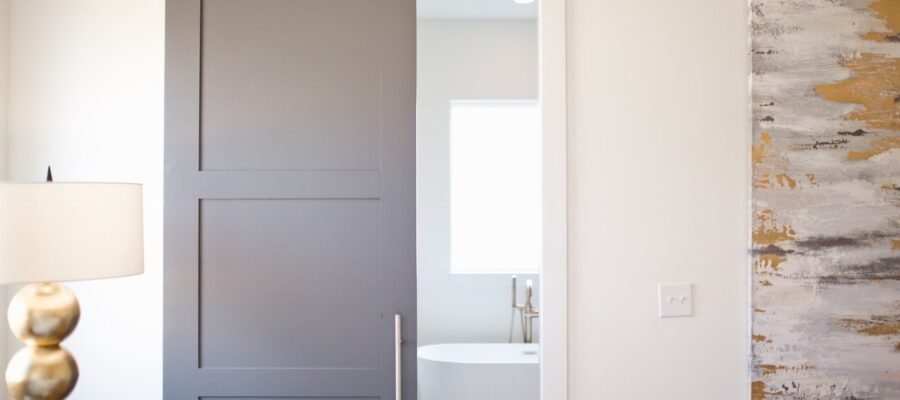
If this seems too complicated, the alternative is an exposed sliding door (barn-style). It doesn’t hide in the wall but slides along an external track. It gives a different aesthetic (more rustic or industrial) while still saving space when opened.
Choose Your Style: The Door as a Decorative Element
Just because it’s hidden doesn’t mean the door shouldn’t be beautiful.
-
Lacquered White (or Wall Color): The minimalist option. It blends in completely and disappears whether closed or open.
-
Translucent Glass: Perfect for kitchens or bathrooms, as it allows light to flow between spaces.
-
Natural Wood: Adds warmth and a rustic or Nordic touch.
-
“Frameless” Design: The most modern trend. Frames are integrated into the wall, making the door completely “invisible” and flush, without moldings.
Conclusion: Is the Work Worth It?
A pocket door is an investment, yes. It requires a bit of construction work and a higher budget than a standard door. But the payoff is permanent: you gain real space, improve your layout, and elevate your home’s design to the next level.
It is, without a doubt, one of the small renovations with the biggest impact for homes struggling with space.
Latest Posts Published
✨ How to Decorate a Windowless Room: 15 Surefire Strategies for Creating a Bright and Cozy Oasis
How to Decorate a Narrow Hallway Without Overwhelming the Space: Complete Guide to Expanding and Modernizing It (2025)
How to Decorate a Small Bathroom with Functional Ideas: The Definitive Guide 2026
How to Organize Your Kitchen to Make It Look Neat and Modern (Step-by-Step Guide)
Wabi-Sabi Decor 2025: How to Create Imperfect Yet Elegant Spaces
How to Choose the Perfect Lighting for Every Room
DIY Decorating with Natural Wood: 15 Rustic and Modern Ideas
How to Combine Maximalism and Minimalism in Interior Design (2025 Trends)
Sustainable Vintage Decor: Guide to a Trendy Retro-Style Home