The Ultimate Guide to Home Lighting Design ✨
Lighting is one of the most crucial elements in interior design, often underestimated. It doesn’t just fulfill a vital practical function; it has a profound impact on the aesthetics, ambiance, and functionality of every space. Choosing the correct lighting can transform a simple house into a welcoming, productive, and visually stunning home.
In this comprehensive article, we’ll cover all the key aspects of selecting the ideal lighting for every room, from basic design principles to the latest in energy-efficient technology.
1. The Fundamentals of Lighting: Beyond Flipping a Switch
To make informed decisions, we must first understand the three main types of lighting that work together to create a well-lit space:
A. Ambient Lighting (General)
This is the main and most important light source in a room. Its purpose is to provide a uniform level of light throughout the entire space, allowing for comfortable general vision.
-
Common Sources: Recessed ceiling lights, flush mounts, track lighting, or a large central chandelier.
-
Key Indicator: Ensuring uniform distribution to prevent harsh shadows and dark corners.
B. Task Lighting (Functional)
This is designed to help perform specific activities easily and without eye strain. It is crucial in areas where you read, cook, work, or apply makeup.
-
Common Sources: Desk lamps, under-cabinet kitchen lights, pendant lights over countertops or islands, and wall sconces in the bathroom.
-
Key Indicator: Adequate intensity and direction to focus on the specific task, minimizing glare.
C. Accent Lighting (Decorative)
This is used to highlight specific objects, architectural textures, or decorative elements, adding depth, drama, and personality to the design.
-
Common Sources: Directional spotlights, picture lights, aimed track lighting, and wall luminaires that project patterns.
-
Key Indicator: Visual effect and focus, with brightness typically three times greater than the surrounding ambient light to achieve the desired impact.
2. The Importance of Color Temperature and Color Rendering Index (CRI)
Two often overlooked technical factors are vital for defining the atmosphere:
Color Temperature (Kelvin – K)
This measures the perceived warmth or coolness of the light.
-
Warm Light (2700K – 3000K): Yellow-reddish tone. Perfect for relaxation spaces like bedrooms and living rooms, creating a cozy, homey atmosphere.
-
Neutral Light (3500K – 4100K): Pure white tone. Ideal for kitchens, bathrooms, and offices, as it is more functional and aids concentration.
-
Cool Light (5000K – 6500K): Bluish tone. Often used in garages, basements, and in task lighting demanding maximum clarity.
Color Rendering Index (CRI / IRC)
This measures a light source’s ability to faithfully reveal the colors of objects compared to natural light. A CRI score of 80 is generally good, while a CRI of 90 or higher is excellent and highly recommended for kitchens, bathrooms, and art studios, where color accuracy is crucial.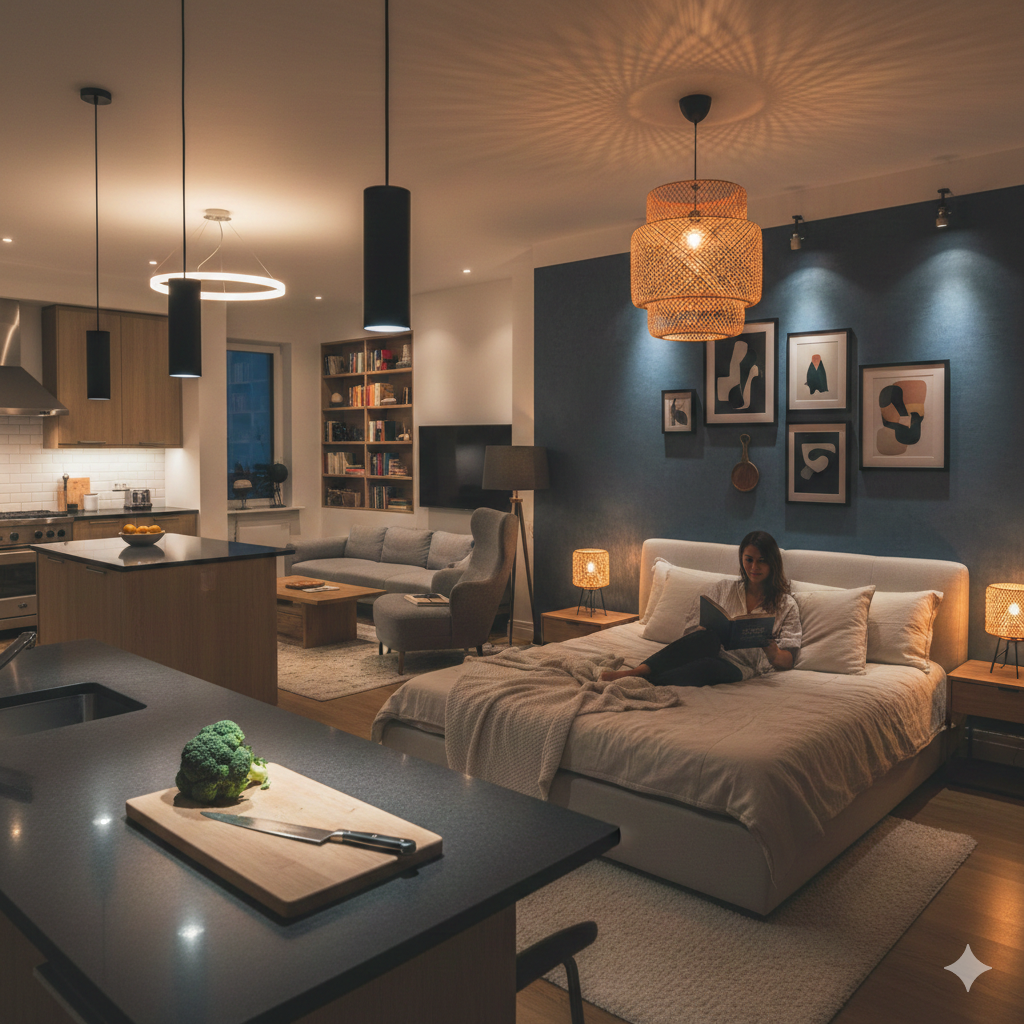
3. Detailed Guide: Perfect Lighting Room by Room
The key to successful lighting is the layering overlap (ambient, task, and accent), adapted to the unique function of each space.
🛏️ Bedroom: Sanctuary of Rest
The bedroom requires an intimate, relaxing atmosphere.
-
Ambient: Soft, warm light (2700K). A flush mount or an elegant chandelier with a dimmer switch is essential for adjusting brightness.
-
Task: Bedside lamps with adjustable arms or wall-mounted sconces for reading. The switch should be easily accessible from the bed.
-
Accent: Small spotlights aimed at a piece of art or recessed lights illuminating the closet.
🛋️ Living Room: Versatility and Socializing
This is a multi-functional space for leisure, conversation, and entertainment. Versatility is paramount.
-
Ambient: Perimeter recessed lights for soft, uniform illumination.
-
Task: An arc floor lamp or a table lamp next to the sofa for reading.
-
Accent: Directed lighting to highlight a fireplace, bookshelves, or collections. Use decorative lamps to add style.
🔪 Kitchen: Functionality and Clarity
The kitchen requires the clearest and most functional lighting, especially in work areas.
-
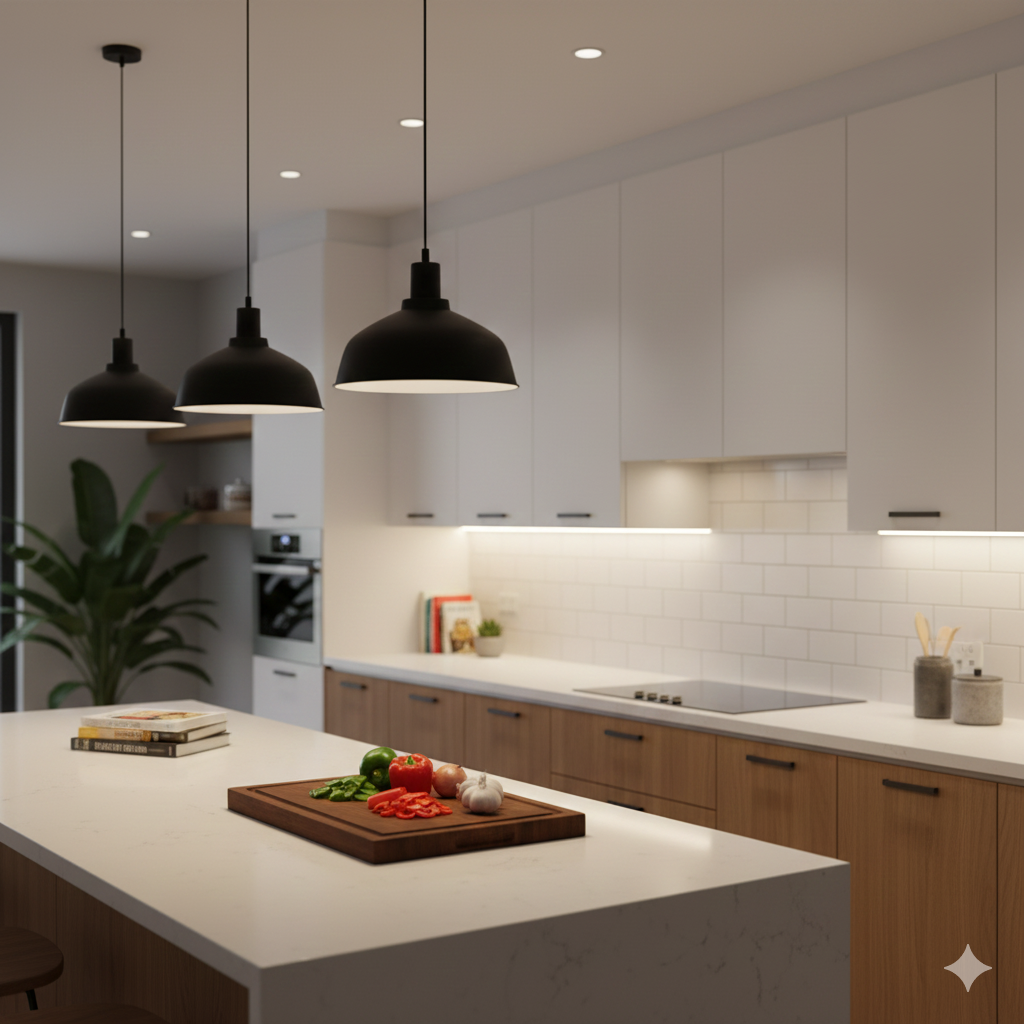
Ambient: Uniformly spaced recessed luminaires for bright general lighting (3500K – 4000K, high CRI).
-
Task: Under-cabinet lighting (LED strips or puck lights) is a must to eliminate shadows cast by upper cabinets onto countertops. Pendant lights over the island or breakfast table.
-
Accent: Lights inside cabinets with glass fronts or toe-kick lighting for a modern touch.
🚽 Bathroom: Task and Beauty
A bathroom needs lighting for precision tasks like shaving or makeup application, as well as for creating a relaxing atmosphere.
-
Task/Ambient: Avoid a single central flush mount. Instead, use wall sconces on the sides of the mirror and a horizontal luminaire above the mirror. This ensures uniform light that eliminates face-distorting shadows (3500K – 4000K, CRI 90+).
-
Accent: Hidden LED strips behind the mirror or in the shower niche.
🖥️ Home Office: Productivity and Visual Comfort
The goal is to minimize eye strain and maximize focus.
-
Ambient: General lighting that minimizes glare on screens.
-
Task: A high-quality articulated desk lamp with a neutral light (4000K) is essential.
-
Crucial Tip: Avoid placing bright light sources directly behind or in front of you while at the screen, as this creates distracting reflections.
4. Technology and Efficiency: The Power of LED Lighting
Today, the choice of technology is almost universal: LED (Light Emitting Diode).
| Characteristic | LED (Light Emitting Diode) | Incandescent/Halogen |
| Lifespan | 15,000 – 25,000 hours | 1,000 – 2,000 hours |
| Efficiency | Consumes up to 80% less energy | Very inefficient, produces a lot of heat |
| Temperature/Color | Fully configurable (CCT) | Fixed, warm |
| Initial Cost | Higher | Lower |
| Long-Term Cost | Much lower (energy and replacement savings) | Higher |
Smart lighting via connected bulbs and systems offers maximum control, allowing you to change the color temperature and brightness from an app or by voice, optimizing the illumination for every activity with just a command.
5. Key Technical Parameters for Purchasing
When choosing a luminaire or bulb, always look for these specifications:
-
Lumens (lm): Measures the total amount of visible light emitted by a source. It is the real indicator of brightness and is more important than wattage. Example: A large kitchen might require 5,000 to 10,000 total lumens.
-
Watts (W): Measures the amount of energy the bulb consumes. LEDs consume very few watts for a high lumen count.
-
Color Temperature (K): As discussed, this defines the tone.
-
CRI (IRC): Measures color accuracy (look for 90+ if it’s key).
-
IP Rating: Especially in bathrooms or outdoors, this rating indicates protection against solids (dust) and liquids (water). A bathroom requires an IP44 or higher near the shower.
Conclusion: Lighting Design as an Investment
Choosing the perfect lighting is not simply selecting a beautiful lamp; it is designing a system that supports your lifestyle and improves the quality of time spent in each space. From the relaxing warmth of a 2700K light in the bedroom to the functional clarity of 4000K in the kitchen, every choice contributes to your well-being and the beauty of your home.
Investing time in planning the layering of light and selecting the appropriate color temperature and CRI, especially with efficient and durable LED technology, is the key to creating personalized ambiances and increasing the value and comfort of your home. Light, after all, is the invisible ingredient that makes everything else look better.
Latest Posts Published
✨ How to Decorate a Windowless Room: 15 Surefire Strategies for Creating a Bright and Cozy Oasis
How to Decorate a Narrow Hallway Without Overwhelming the Space: Complete Guide to Expanding and Modernizing It (2025)
How to Decorate a Small Bathroom with Functional Ideas: The Definitive Guide 2026
How to Organize Your Kitchen to Make It Look Neat and Modern (Step-by-Step Guide)
Wabi-Sabi Decor 2025: How to Create Imperfect Yet Elegant Spaces
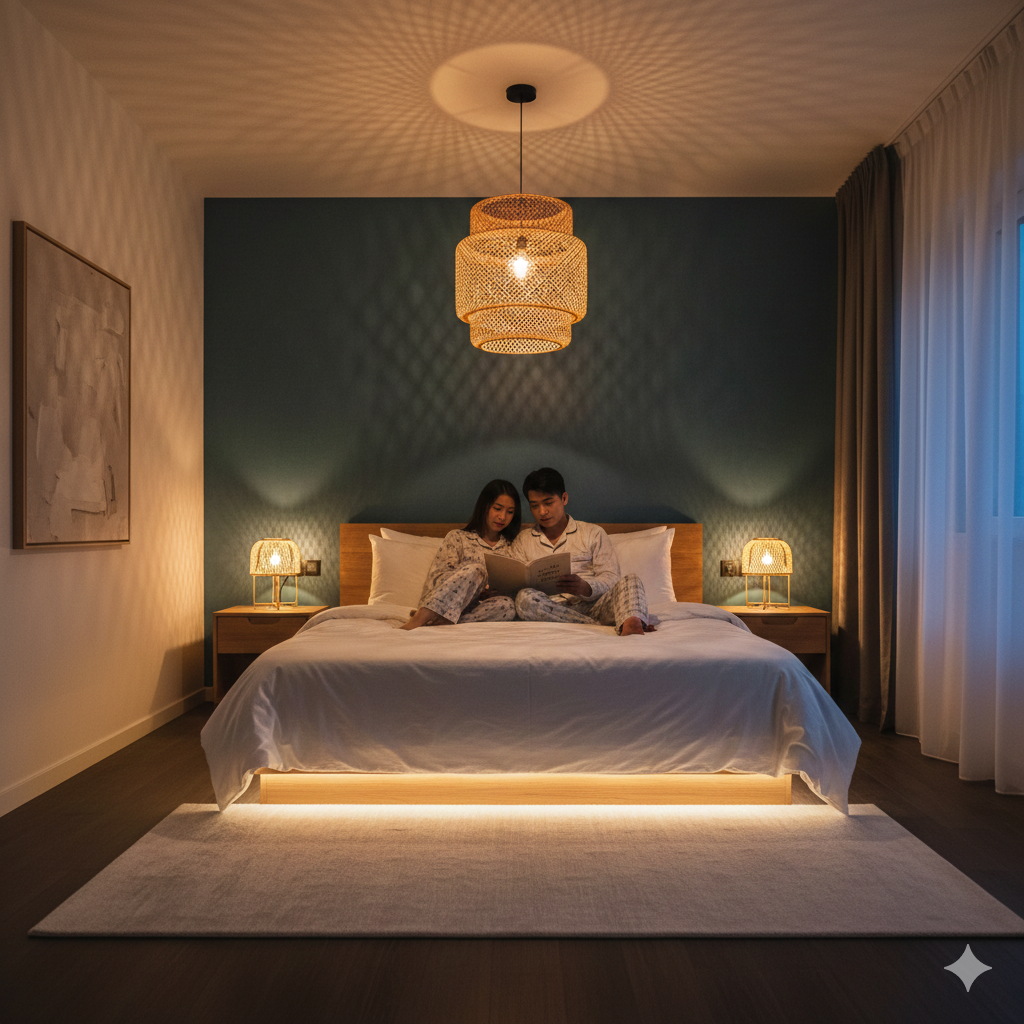
How to Choose the Perfect Lighting for Every Room

DIY Decorating with Natural Wood: 15 Rustic and Modern Ideas
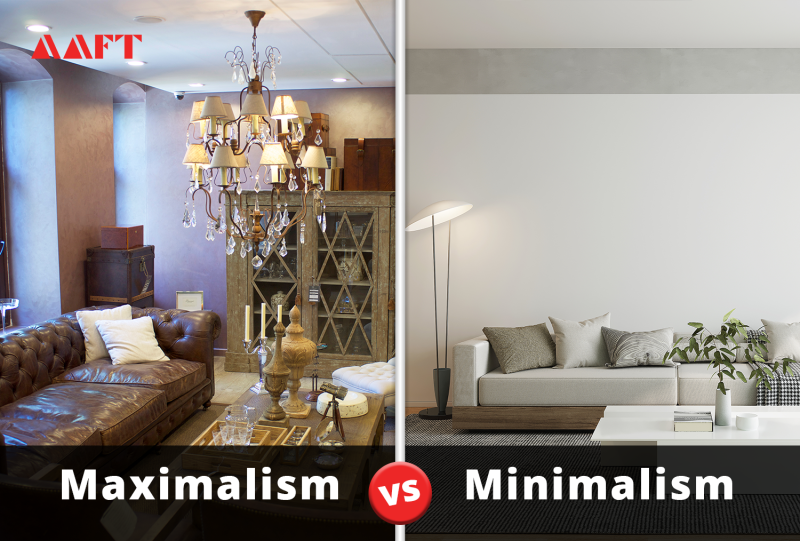
How to Combine Maximalism and Minimalism in Interior Design (2025 Trends)
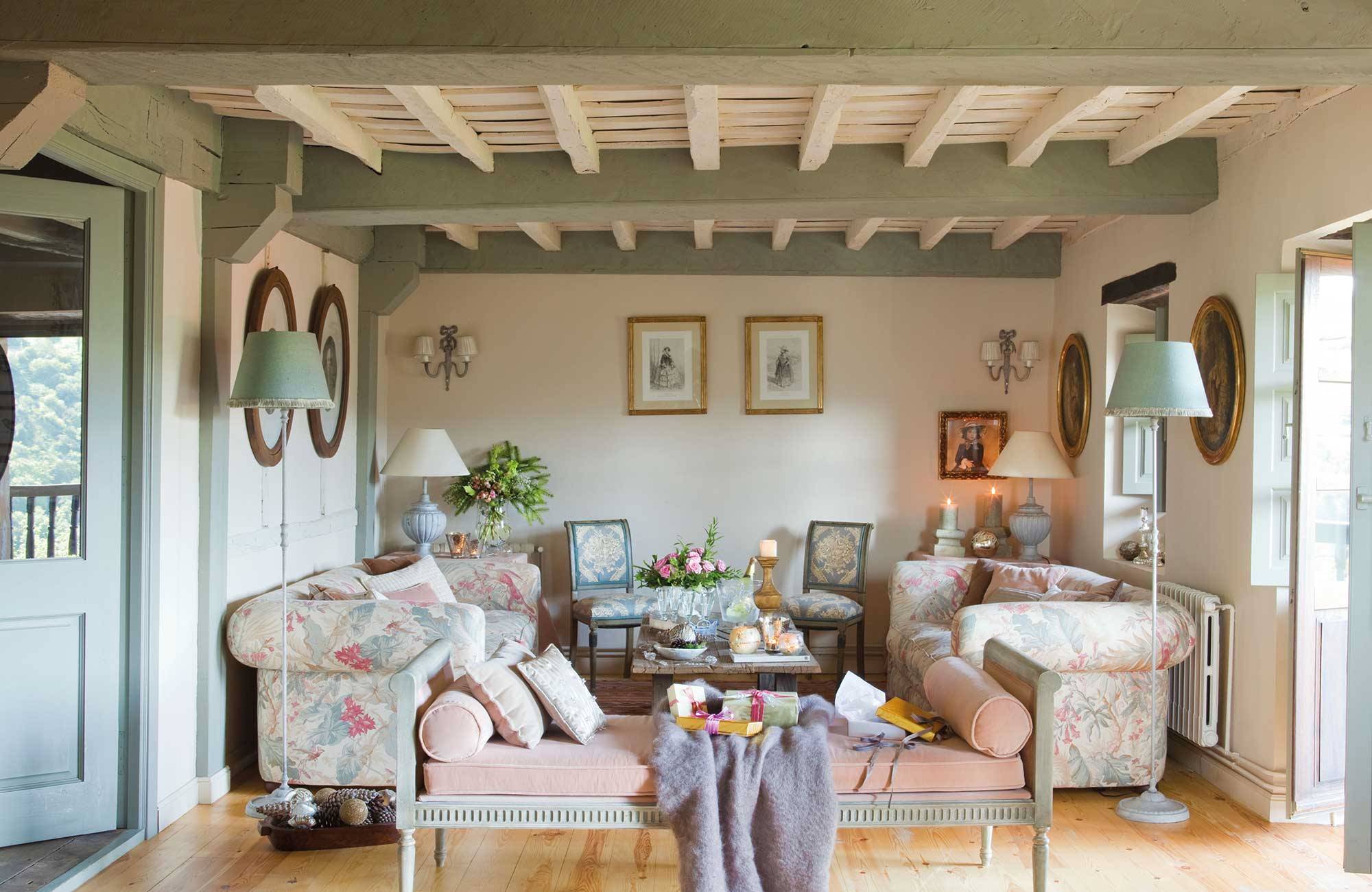
Sustainable Vintage Decor: Guide to a Trendy Retro-Style Home