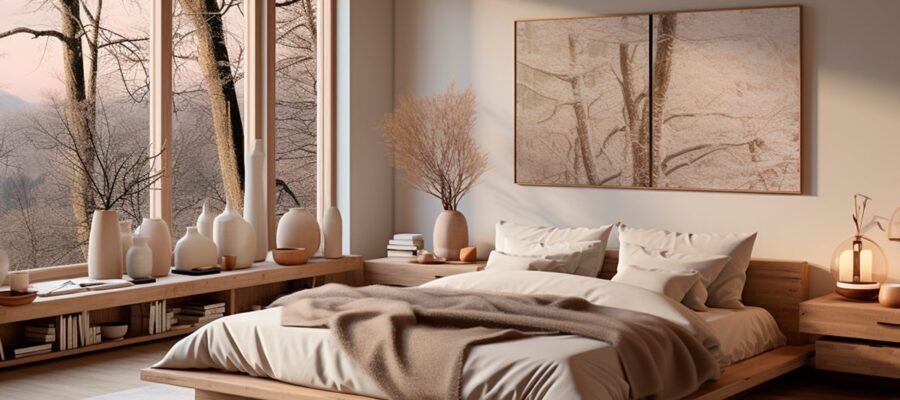
The Japandi Style (a harmonious fusion between rustic Nordic (Scandinavian) functionality and the elegant serenity of Japanese Minimalism) is the most sought-after design trend for creating spaces that promote well-being and tranquility. The Japandi bedroom is not just aesthetic; it is a refuge designed to reduce visual clutter and encourage rest.
The key to achieving this aesthetic lies in building a foundation of serenity using white color and neutral tones. However, the challenge is knowing which elements, materials, and furniture combine to prevent the space from feeling cold or incomplete.
This comprehensive guide is your roadmap to transforming your bedroom into a Japandi sanctuary. You will learn step-by-step how to use the simplicity of white, select the earthy color palette, and choose furniture that honors craftsmanship, order, and functionality.
I. The Japandi Palette: White, Neutrals, and the Earthy Touch
Japandi relies on a color palette that acts as a silent canvas, allowing the texture and form of the furniture to be the protagonists.
1. The Base: Functional and Warm White
White is the background, but it must be chosen intelligently to evoke Nordic comfort (Hygge).
-
Broken White and Chalk: Opt for whites with a subtle warm undertone (broken white, off-white, or chalk) for the walls and ceiling. This avoids the coldness of pure white and adds an inherent softness to the ambiance.
-
Base Tone: Use this warm tone on large surfaces (walls, ceilings, carpentry) to maximize natural light, which is crucial in both aesthetics.
2. Complementary Tones: Beige, Gray, and Graphic Black
Once the white base is established, secondary colors are introduced, always in muted and natural tones.
-
Soft Grays and Beige: Use these tones in textiles (rugs, bedding) or upholstery. They provide depth without distracting.
-
The Japanese Graphic Touch (Wabi-Sabi): Introduce matte black or dark gray in small details: a mirror frame, furniture legs, or a pendant lamp. This crisp contrast adds definition, visual discipline, and honors the Japanese aesthetic of imperfection and the simple line.
II. Essential Furnishings: Low, Simple, and Handcrafted Forms
Furniture in the Japandi style is functional, durable, and has clean lines. Less is more, and every piece must have a purpose.
1. The Bed: Lowness and Simplicity
The Japanese principle of being close to the ground encourages a sense of connection and tranquility.
-
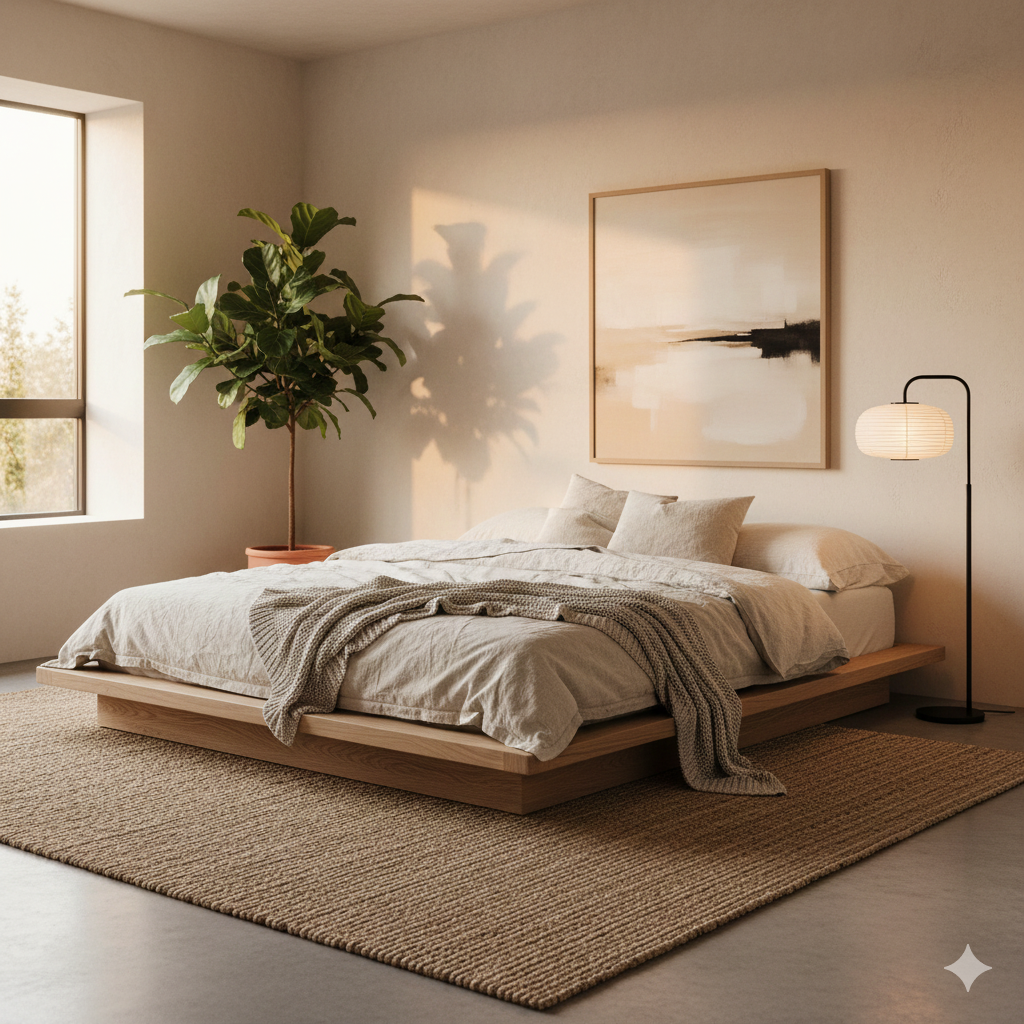
Low Platform Beds: Choose low, minimalist, or platform-style bed frames. This creates a visual sense of spaciousness and calm, making the space feel larger.
-
Natural Wood: The material should be light wood (oak, ash, pine) with an untreated, matte, or oiled finish. The goal is to highlight the natural wood grain, celebrating its imperfect beauty (Wabi-Sabi).
2. Discreet and Functional Storage
Order is crucial for Japandi. Storage must be invisible or serve as a design element.
-
Low Dressers and Shelving: Opt for low wooden dressers that do not exceed waist height. An uncluttered surface is essential for visual calm.
-
Integrated Wardrobes: If possible, use built-in wardrobes or those with smooth, handleless doors, painted the same color as the white wall. This minimizes the presence of storage.
-
Minimalist Nightstands: Use simple, functional stools or wooden blocks instead of traditional nightstands. Their function is to hold a lamp and one object, nothing more.
III. Organic Textures and Materials: Scandinavian Warmth
To prevent Japanese minimalism from feeling too cold, the Nordic component introduces warmth through texture.
1. Natural Textiles and Layers
The feeling of comfort (Hygge) is achieved with bedding.
-
Linen and Organic Cotton: Use high-quality linen or cotton sheets and duvet covers in raw, beige, or broken white tones. The natural, wrinkled texture of linen is fundamental to the relaxed character of the style.
-
Comfort Layers: Add a thick blanket of wool, cashmere, or mohair in a pale gray or stone tone. These soft, voluminous textures contrast beautifully with the hard lines of the wooden structure.
-
Wool or Jute Rugs: A large, natural fiber rug with a thick texture under the bed not only defines the space but also provides immediate tactile warmth.
2. Handcrafted and Earthy Details
Every accessory must be chosen for its beauty and its connection to nature.
-
Handmade Ceramics: Vases, bowls, or candle holders made of ceramic with imperfect finishes (matte, organic glazes) in earth tones.
-
Paper and Bamboo: Ceiling or table lamps with rice paper shades (Japanese lanterns) or woven bamboo. These materials diffuse a soft light and are emblematic of Japandi.
IV. Lighting and Arrangement: Creating the Zen Refuge
The way the room is lit and organized is what transforms the decor into an experience.
1. Calming Illumination (Ambient and Subtle Light)
The light must be soft, warm, and indirect.
-
Warm Temperature: Use very warm color temperature light bulbs ($2200text{ K} – 2700text{ K}$). The light should be an embrace, not a spotlight.
-
Low Lighting: Prioritize low floor lamps or small table lamps. Light that comes from low sources is inherently more relaxing.
-
Diffuse Light: The light should filter through paper or fabric shades. Avoid powerful, directional ceiling spotlights.
2. Principles of Order and Emptiness (Ma and Negative Space)
The Japanese concept of Ma (the appreciation of empty space) is central to Japandi.
-
Rule of Three: Decorate surfaces (dressers, nightstands) only with odd groups of three objects (e.g., a plant, a book, a candle). Everything else must be stored away.
-
Negative Space: Deliberately leave large wall areas empty. Empty space is as important as the object; it allows the eye and mind to rest.
-
Mirrors: Use a simple wooden-framed, full-length mirror, lightly leaned against the wall, to maximize light and add a functional element without being invasive.
Conclusion: The Japandi Bedroom as an Investment in Serenity
The Japandi bedroom is the answer to the chaos of modern life. By building your space on a foundation of warm white, choosing light wood furniture with low and simple lines, and surrounding yourself with natural textiles, you are not just decorating a room. You are investing in a lifestyle that values tranquility, functional simplicity, and deep comfort. The result is a dreamy retreat where every element has a purpose and every moment of rest is restorative.
Latest Posts Published
✨ How to Decorate a Windowless Room: 15 Surefire Strategies for Creating a Bright and Cozy Oasis

How to Decorate a Narrow Hallway Without Overwhelming the Space: Complete Guide to Expanding and Modernizing It (2025)
How to Decorate a Small Bathroom with Functional Ideas: The Definitive Guide 2026
How to Organize Your Kitchen to Make It Look Neat and Modern (Step-by-Step Guide)
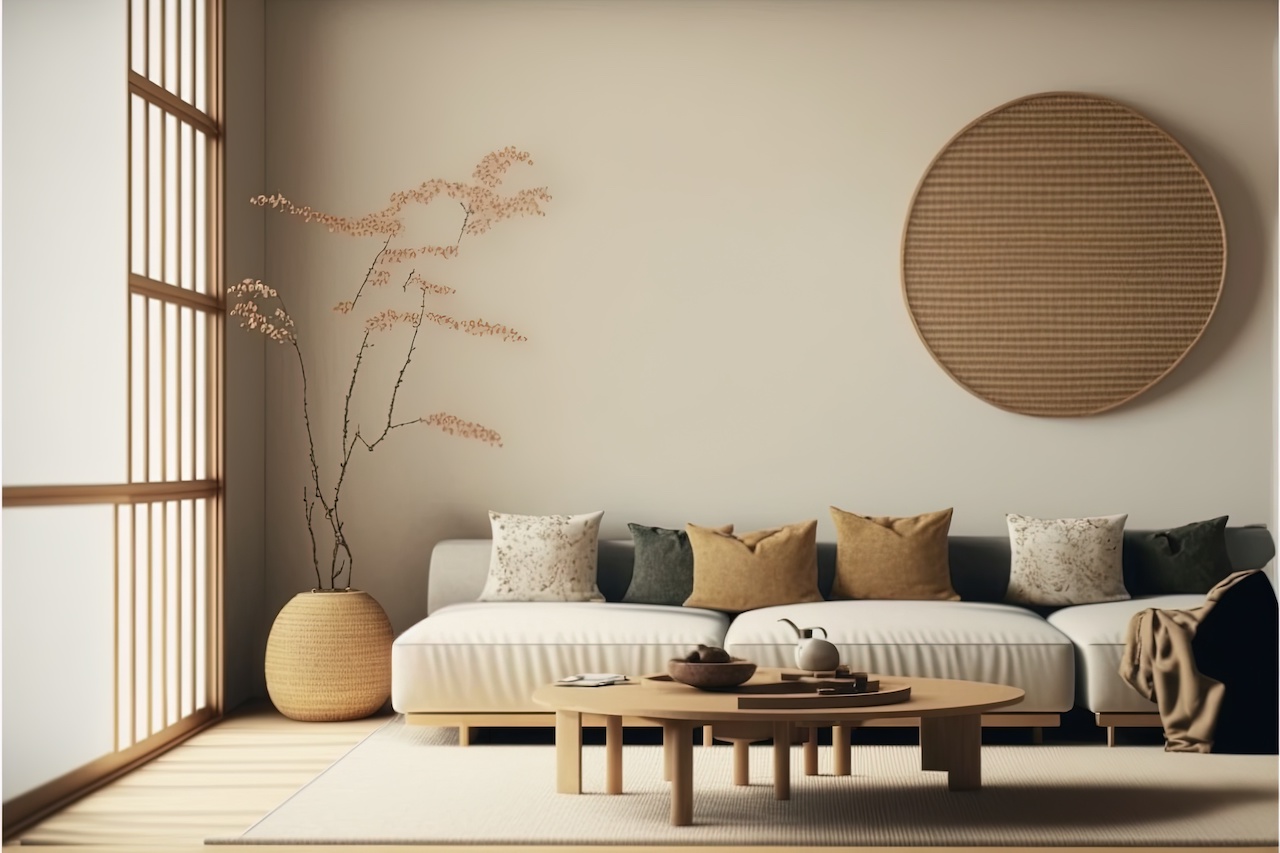
Wabi-Sabi Decor 2025: How to Create Imperfect Yet Elegant Spaces
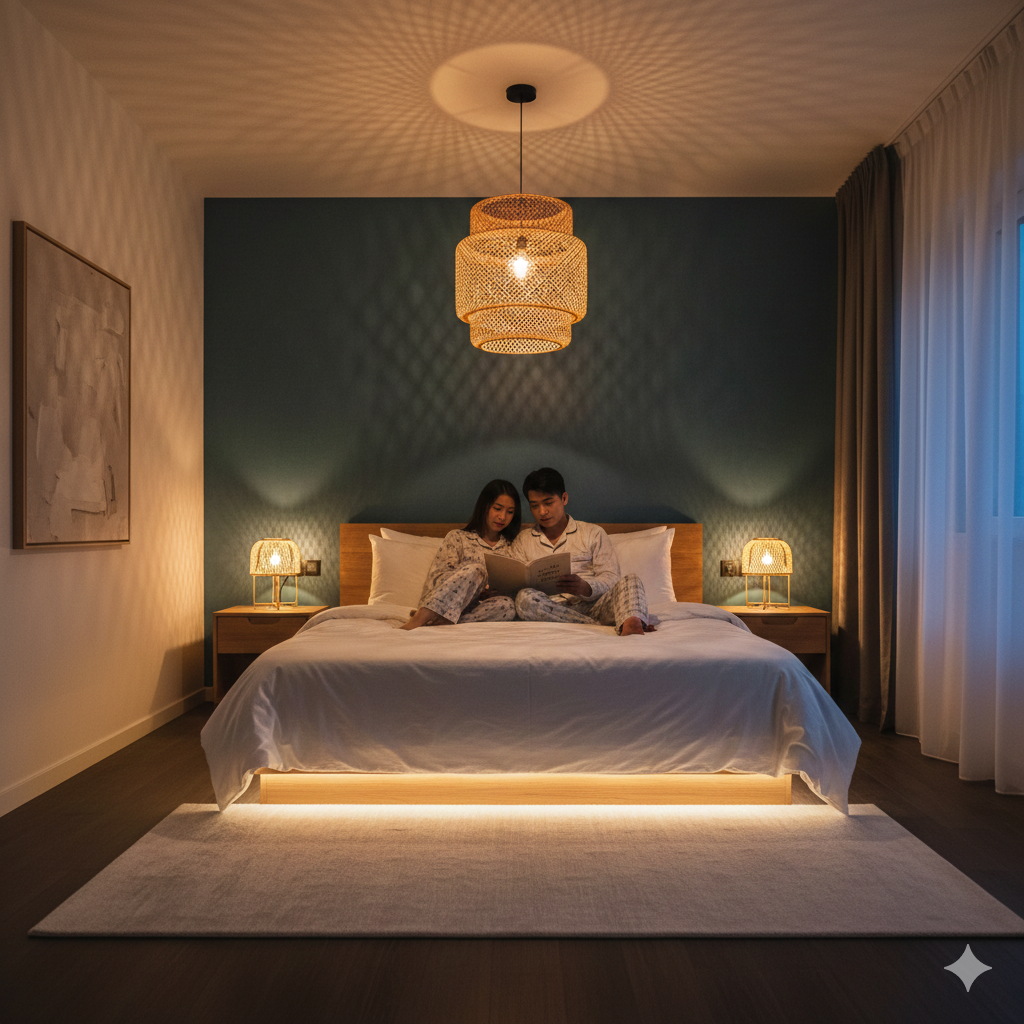
How to Choose the Perfect Lighting for Every Room
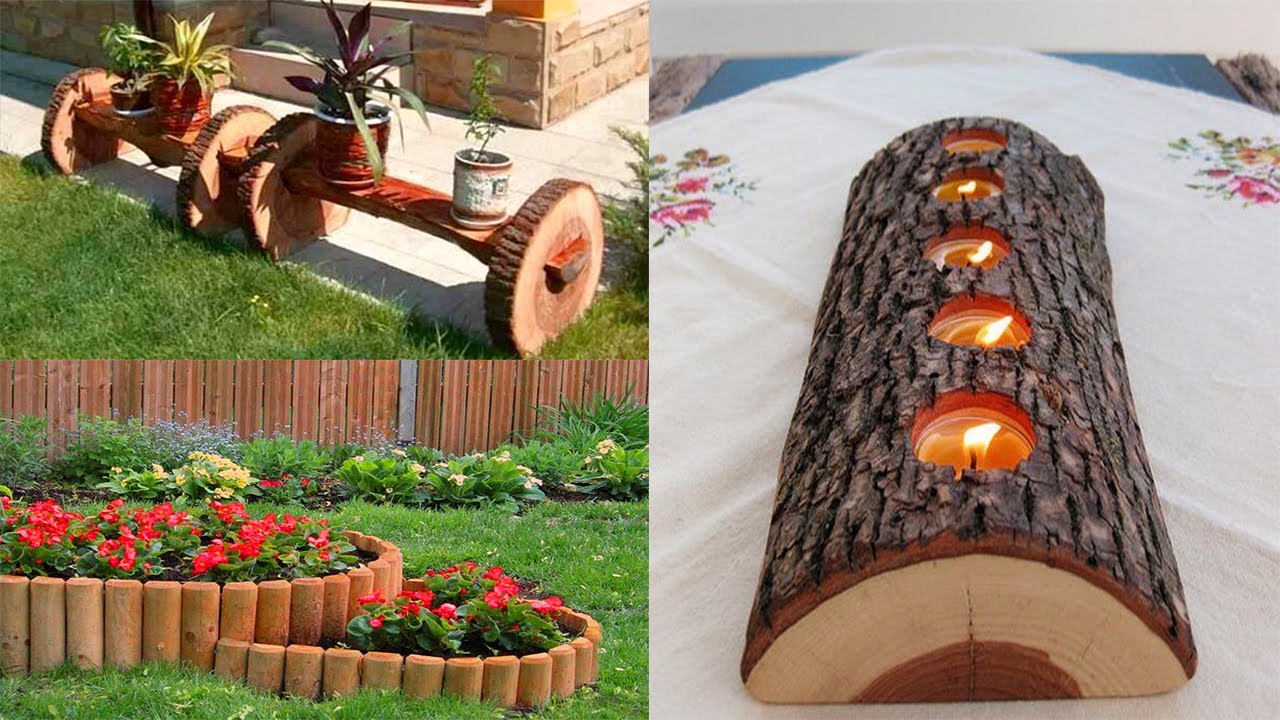
DIY Decorating with Natural Wood: 15 Rustic and Modern Ideas
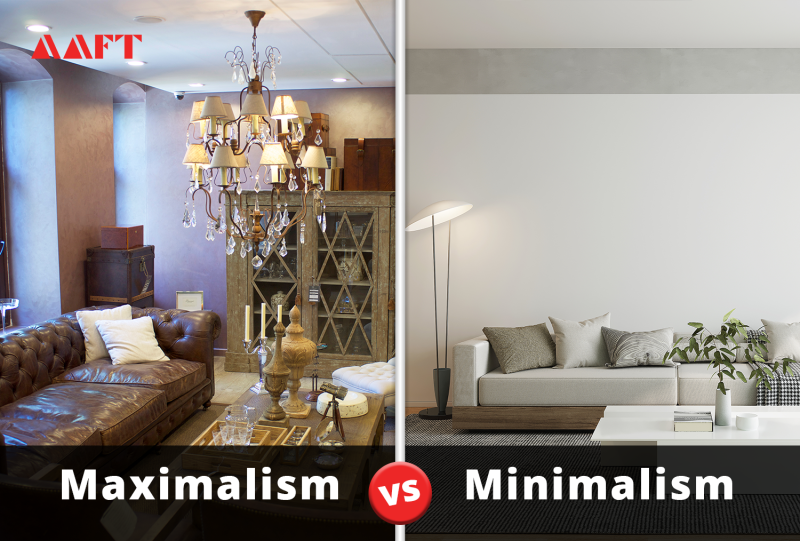
How to Combine Maximalism and Minimalism in Interior Design (2025 Trends)
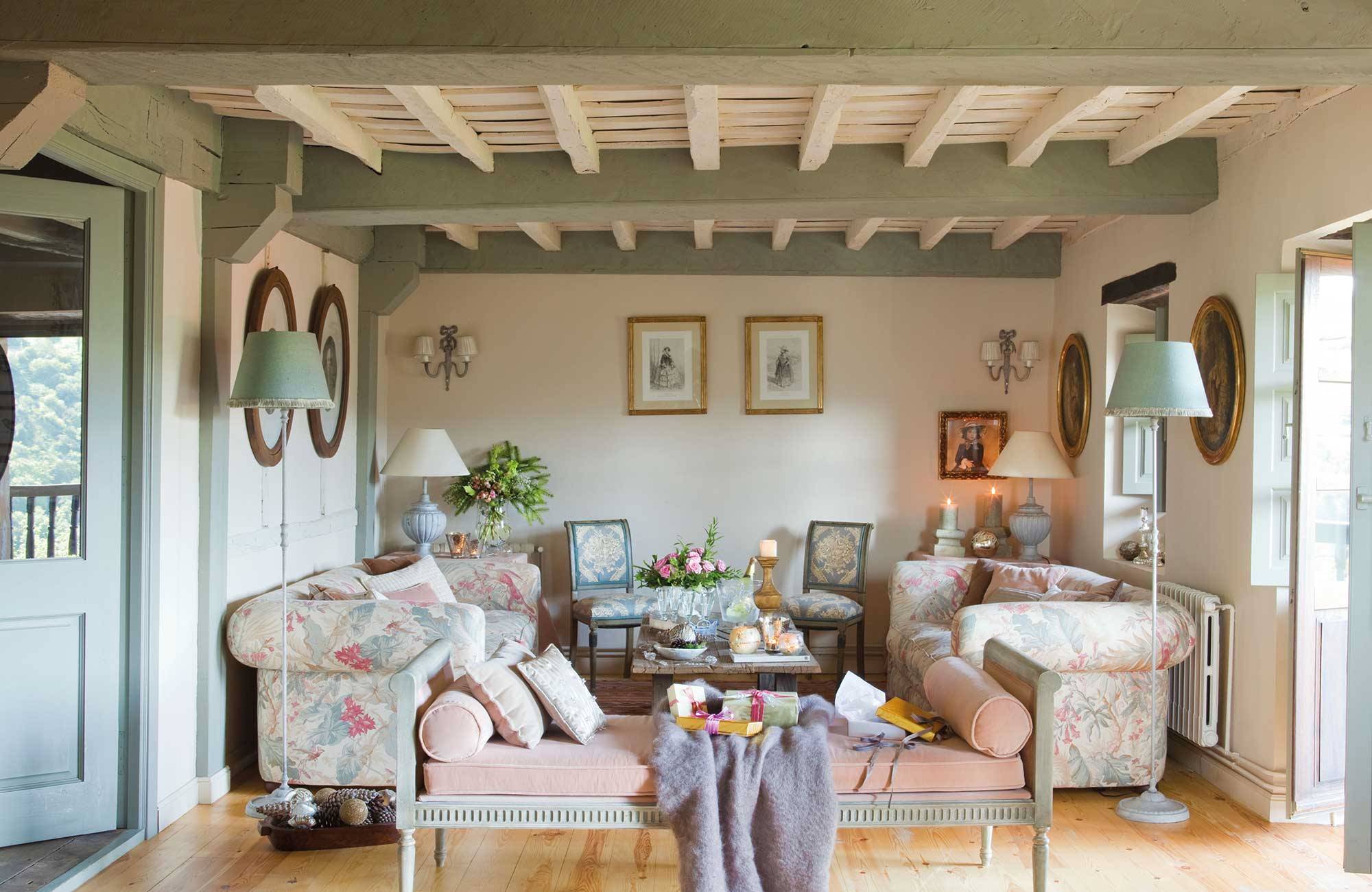
Sustainable Vintage Decor: Guide to a Trendy Retro-Style Home