Christmas is a magical time, full of light, joy, and tradition. However, for many, it has also become synonymous with excessive consumption, waste, and a considerable environmental impact. But what if I told you it’s possible to celebrate Christmas with all its splendor, while also taking care of the planet and saving money? Sustainable and eco-friendly Christmas decoration is not just a rising trend but a philosophy that will allow you to enjoy a more conscious, authentic, and meaningful holiday season.
In this definitive guide, we will explore how to transform your home into an environmentally respectful Christmas sanctuary, from choosing the tree to the smallest ornaments. Discover how creativity, reuse, and natural materials can bring to life a unique decoration that your loved ones will remember, not only for its beauty but for the message of hope and sustainability it conveys.
I. 🌿 The Green Heart of Your Christmas: The Sustainable Tree
The tree is, without a doubt, the star of the Christmas decor. But what is the most ecological option? The answer is not as simple as it seems and depends on several factors.
1. Natural Trees: Conscience from the Forest
-
Cultivated Trees (with roots): If you buy a natural tree with roots and plant it after the holidays, this is one of the most sustainable options. Make sure it comes from local nurseries with certifications guaranteeing responsible forest management. Once Christmas is over, plant it in your garden or look for local reforestation programs.
-
Cultivated Trees (cut): If planting is not an option, a cultivated cut tree is better than a wild one. These trees are grown specifically for Christmas, and their life cycle absorbs CO2 for years. The crucial thing here is recycling. Check with your local council about tree collection points; many shred them for compost or biomass. Never throw them in the regular trash!
-
Tree Rental: An increasingly popular option in some cities is renting trees with roots. They deliver it, you enjoy it, and they pick it up to replant it, guaranteeing its survival and minimizing your footprint.
2. Artificial Trees: Durability is Key
An artificial tree is not intrinsically «bad» if it is used for many years. The environmental impact of its manufacturing and transport is significant, but it is amortized over time.
-
Reuse: If you already have an artificial tree, use it! The most sustainable option is the one you already own.
-
Quality and Durability: If you are going to buy a new one, invest in a high-quality tree that will last you at least 10-20 years. Avoid low-quality ones that end up in the trash shortly after.
-
Materials: Look for trees made with recycled or recyclable materials, although this can be a challenge.
3. Creative Alternatives: DIY Trees
This is where your creativity can shine, and your environmental impact is minimal.
-
Dry Branch Tree: Gather fallen branches in a forest or park (with permission), clean them, and arrange them in a cone shape or place them in a large vase. You can paint them white or gold, or leave them natural.
-
Book Tree: If you are a book lover, stack your books in the shape of a tree and decorate them with lights.
-
Wall Tree: Use garlands, lights, photos, or small branches to create the silhouette of a tree directly on a wall.
-
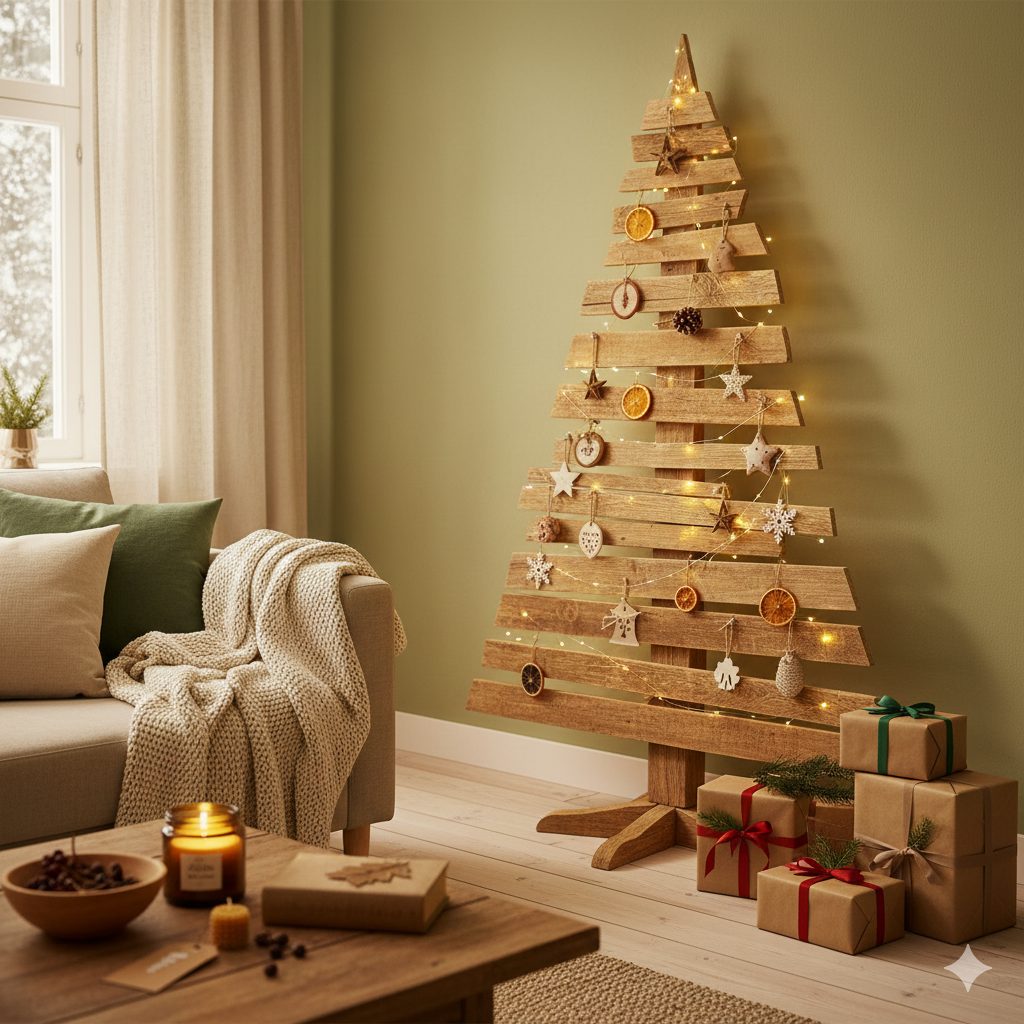
Pallet or Recycled Wood: Build a wooden tree using pallets or old boards—a rustic and customizable option.
II. ✨ Sustainable Ornaments: From Nature to Your Home
Ornaments are the soul of Christmas decoration. Forget single-use plastics and opt for natural beauty and DIY creativity.
1. Treasures from Nature
-
Pine Cones: Collect them during your walks, wash them, and decorate them with a little gold or silver paint, or leave them natural. You can hang them from the tree, in garlands, or use them as centerpieces.
-
Dried Orange Slices: Cut oranges into thin slices and dry them in the oven at a low temperature or in a dehydrator. Their aroma and color are perfect for the tree, garlands, or as coasters.
-
Cinnamon Sticks and Star Anise: In addition to decorating, they provide an intoxicating Christmas aroma. Tie them together with jute twine to create small hangers.
-
Sprigs of Holly, Juniper, or Fir: Collect small sprigs (always respectfully and without damaging the plant) to create small bouquets or incorporate them into your garlands.
-
Nuts and Chestnuts: Paint them or leave them in their natural state to create rustic and endearing ornaments.
2. DIY and Reused Materials
-
Salt Dough or Clay Ornaments: This is a fantastic activity to do with children. Create Christmas shapes (stars, hearts, gingerbread men), bake them, and paint them.
-
Felt or Recycled Fabric Ornaments: Use fabric scraps or old felt garments to cut shapes, sew them, and stuff them.
-
Recycled Paper or Cardboard Ornaments: Create stars, snowflakes, or three-dimensional figures using newspaper, old magazines, or cardboard boxes.
-
Cork Stoppers: Glue them together to form small trees, reindeer, or wreaths.
-
Glass Jars: Turn them into candle holders, small Christmas terrariums, or containers for sweets.
-
Glass Bottles: Paint them and use them as vases or candlesticks.
-
Wood Ornaments: If you have small pieces of wood (branches, blocks), you can sand them, paint them, or engrave designs on them.
3. Sustainable Garlands and Wreaths
-
Fabric Garlands: Use strips of old fabric or scraps to braid colorful garlands.
-
Popcorn or Cranberry Garlands: A classic tradition that is 100% biodegradable and attractive.
-
Garlands from Branches and Natural Elements: Combine pine branches, pine cones, dried orange slices, and jute or fabric ribbons to create spectacular garlands.
-
Door Wreaths: Instead of buying a foam base, use one made of flexible branches (wicker, vine) and decorate it with natural elements.
III. 💡 Efficient and Warm Lighting
Lights are essential at Christmas, but they can also be major energy consumers.
-
LED Lights: These are the most energy-efficient option. They consume up to 90% less than traditional incandescent bulbs and last much longer. Although the initial investment is higher, the long-term savings are significant.
-
Timers: Use timers so that the lights only turn on during the hours when you will actually enjoy them.
-
Candles and Candlesticks: Opt for candles made of soy wax, beeswax, or vegetable wax, which are more natural and burn cleaner than paraffin. Use them in centerpieces or fireplaces to create a warm and cozy atmosphere.
-
Solar Outdoor Lights: If you decorate your garden or balcony, solar lights are an excellent option to avoid consuming electrical energy.
IV. 🎁 Sustainable Gift Wrapping
Gift presentation can also be eco-friendly.
-
Recycled or Recyclable Paper: Avoid laminated or glitter gift wrap, as they are not recyclable. Opt for kraft paper, newspapers, old maps, or reusable paper bags.
-
Furoshiki (Fabric): Wrap your gifts in pieces of fabric (scarves, scraps, napkins). It’s a beautiful Japanese technique, and the wrapping becomes part of the gift or is reused.
-
Natural Embellishments: Instead of plastic bows, use jute twine, raffia, small branches, pine cones, dried leaves, or flowers to decorate the packages.
-
Reusable Boxes: Save gift boxes from previous years and use them again.
V. 🍽️ Eco-Conscious Christmas Table
The table is the center of the gatherings. Make it special and sustainable.
-
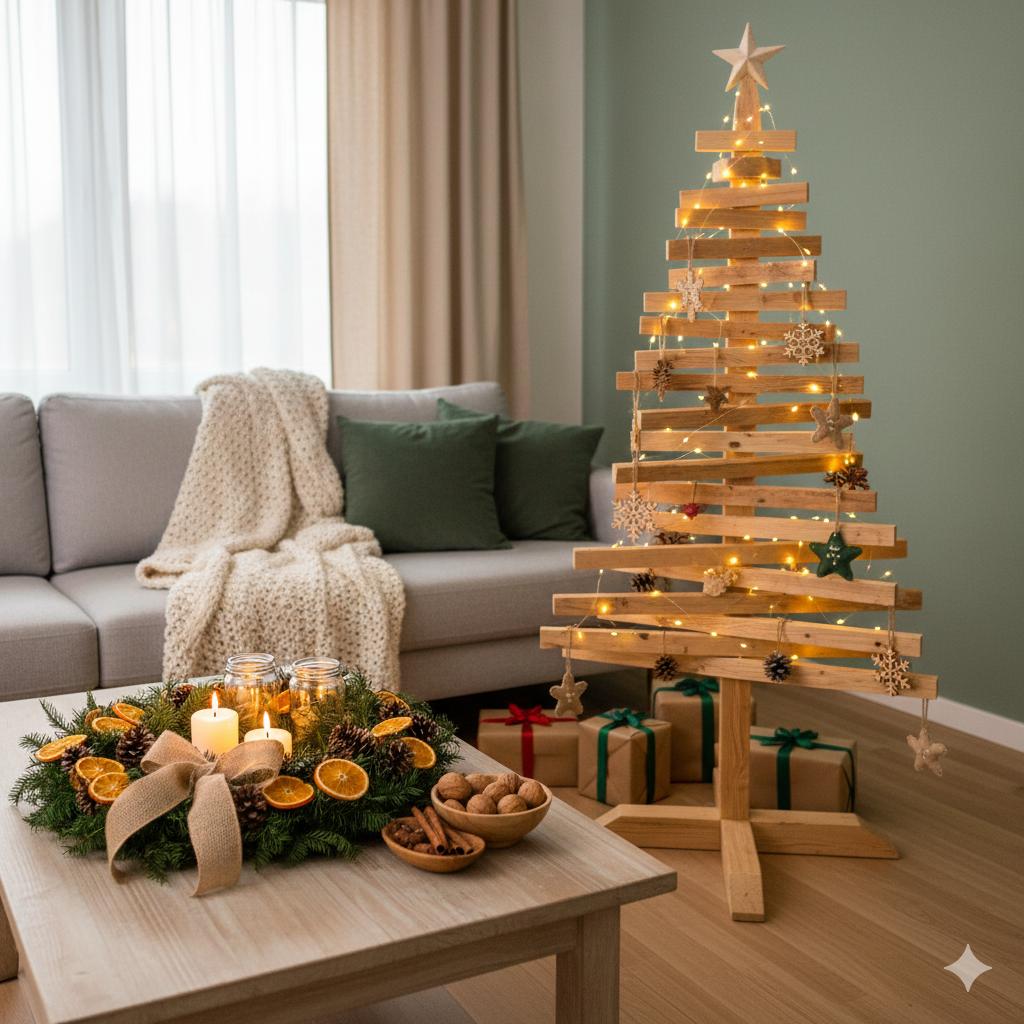
Natural Centerpieces: Create arrangements with pine branches, holly, pine cones, orange slices, candles, and nuts.
-
Reusable Tableware and Glassware: Avoid disposable plastic or cardboard items. Use your usual dinnerware and glassware. If you need extras, look in second-hand stores.
-
Cloth Napkins: Much more elegant and eco-friendly than paper ones.
-
Food Decoration: Use seasonal fruits (pomegranates, grapes), nuts, or small sweets as part of the decor.

VI. ♻️ Sustainable Maintenance and Storage
Sustainability does not end with taking down the decorations.
-
Careful Storage: Store your ornaments in reusable boxes, well protected, so they last for many years. Avoid wrapping them in new bubble wrap; use cloth, old newspaper, or pieces of cardboard.
-
Repair: If an ornament breaks, try to repair it before discarding it.
-
Donation or Exchange: If you have ornaments you no longer use, donate or swap them with friends or family.
-
Composting: Natural elements that you don’t want to keep can go into the compost pile.
VII. Benefits of a Sustainable Christmas
Adopting eco-friendly Christmas decorations not only benefits the planet but also your home and spirit:
-
Economic Savings: Reusing, recycling, and creating your own ornaments drastically reduces expenditure.
-
Creativity and Personalization: Your home will have a unique decoration, full of history and personality, that reflects your style and values.
-
Waste Reduction: Less plastic, fewer disposable wrappers, less superfluous consumption.
-
Lower Carbon Footprint: From the choice of the tree to the lighting, every decision counts toward reducing the environmental impact.
-
Connection with Nature: Using natural elements brings you closer to the beauty of the environment and inspires you.
-
Family Moments: Creating DIY ornaments is a wonderful activity to share with children and adults, building memories and traditions.
-
A Message of Hope: Celebrating sustainably is a declaration of love for the planet and future generations.
Conclusion: A Christmas with Purpose
Sustainable and eco-friendly Christmas decoration is much more than a trend; it is a conscious way to celebrate the joy of the season, honoring the beauty of nature and the value of creativity. By opting for reuse, natural materials, and energy efficiency, you not only transform your home into a magical and unique space but also contribute to a greener and more hopeful future.
This year, the magic of Christmas can go hand-in-hand with environmental responsibility. Dare to explore, create, and share a celebration that resonates with the true spirit of giving: giving to the planet, giving to your community, and giving to future generations.
Are you ready to take the step toward a greener, more conscious Christmas? Start today and discover the beauty of sustainability!
Latest Posts Published

✨ How to Decorate a Windowless Room: 15 Surefire Strategies for Creating a Bright and Cozy Oasis

How to Decorate a Narrow Hallway Without Overwhelming the Space: Complete Guide to Expanding and Modernizing It (2025)
How to Decorate a Small Bathroom with Functional Ideas: The Definitive Guide 2026
How to Organize Your Kitchen to Make It Look Neat and Modern (Step-by-Step Guide)

Wabi-Sabi Decor 2025: How to Create Imperfect Yet Elegant Spaces

How to Choose the Perfect Lighting for Every Room
DIY Decorating with Natural Wood: 15 Rustic and Modern Ideas
How to Combine Maximalism and Minimalism in Interior Design (2025 Trends)
Sustainable Vintage Decor: Guide to a Trendy Retro-Style Home